How to Clean Vinyl Records Properly | Best Methods & Cleaning Tools
Keeping your vinyl records clean isn’t just about appearances—it directly affects sound quality, stylus life, and the longevity of your collection. Dust, fingerprints, static, and debris can cause pops, crackle, and unnecessary wear on both your records and turntable cartridge. Affiliate Disclosure: This page contains affiliate links. As an Amazon Associate and participant in other affiliate programs, Rocky Mountain Records may earn a commission if you make a purchase through links on this site.
Whether you’re spinning brand-new releases or rescuing thrift-store treasures, these proven cleaning methods will help keep your records sounding their best for years to come.
Why Cleaning Vinyl Records Matters
Many new collectors are surprised to learn that even brand-new records often arrive with factory dust and pressing residue. Every time a dirty record is played, those particles can be pushed deeper into the grooves by your stylus.
Benefits of regular record cleaning include:
- Reduced pops and crackle
- Improved sound clarity
- Less static buildup
- Longer stylus life
- Better long-term preservation of your collection
A few seconds of cleaning before each play can make a noticeable difference.
Daily Cleaning: The 30-Second Habit Every Collector Should Have
Clean Before Every Play
Best tool:
-
Fluance Record Cleaning Brush – Anti-static: – This record cleaning brush uses a combination of carbon fiber and soft PBT bristles to gently lift dust while helping neutralize static on your records. Use every time you play a record.
- Audio Technica AT601: This brush will remove dust and harmful contaminants from you vinyl records.
Extra Brush + Stylus Care
-
Fluance Vinyl Record & Stylus Cleaning Kit – Comes with both record brush and stylus brush. If you read this site, you know that I love Fluance turntables and speakers, so it’s no surprise I am recommending their record cleaning brushes too.
-
Audio-Technica AT6011 Record Cleaning Brush – Budget-friendly anti-static brush every collection needs.
Pro tip: clean the stylus regularly — a dirty needle adds noise and wears grooves prematurely.
Wet Cleaning (Hand-Clean for Deeper Dirt)
For records with visible dust, fingerprints, or surface grime:
-
Place record on your turntable.
-
Apply a vinyl-safe cleaning solution (never household cleaners).
-
With a microfiber cloth or (preferably a record cleaning brush), spin the record using the dead wax area and clean off dirt and debris.
-
Let dry completely before playing.
Recommended basic wet cleaning tools:
-
Big Fudge Vinyl Record Cleaning Kit– More or less the next step up. You’ll get cleaning solution, a velvet brush and Stylus brush. All for around $22
-
Vinyl Buddy Record Cleaning Kit – 5-piece kit with solution and brush. I’ve bought this one as gifts for friends. It’s got everything you need.
💡 Never use dish soap, glass cleaners, or tap water — these can leave residue or damage grooves.
Machine & System Cleaners (Deep & Thorough)
If you have a large collection or often find old or very dusty records, these systems will get dirt deep out of grooves without scrubbing by hand:
Mid-Range Manual System
-
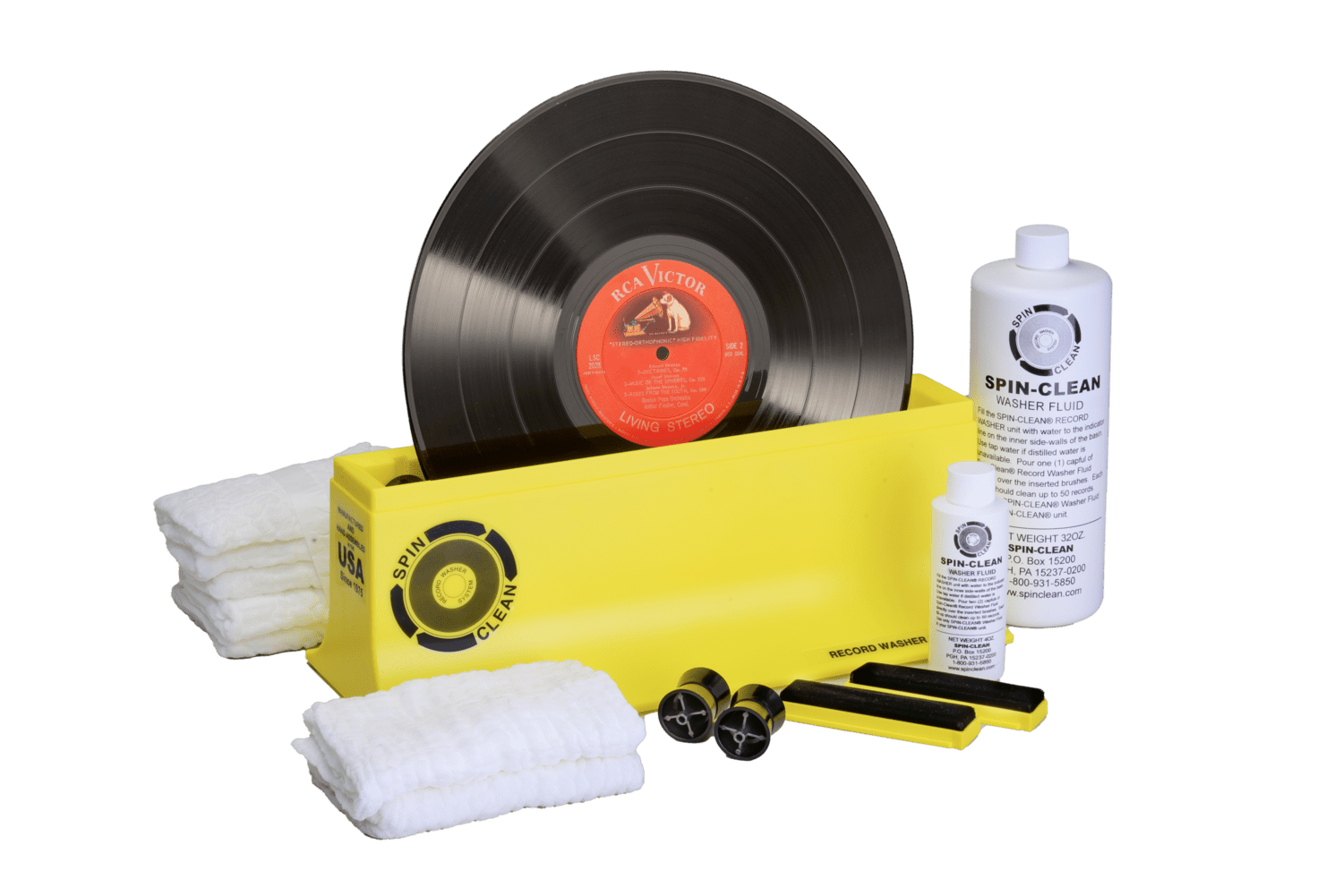
Spin-Clean Record Washer System – The Spin-Clean Record Washer System is one of the most popular and affordable deep-cleaning solutions for vinyl collectors. Unlike a simple record brush that only removes surface dust, the Spin-Clean uses a basin filled with cleaning solution and soft cleaning brushes that reach deep into the grooves as you manually rotate the record through the bath.
- Big Fudge Vinyl Record Cleaning Kit – More or less the same system. I am personally familiar with the Spin Clean, so I know these systems do work – though they are a bit of a process.
Deep Cleaning Devices
VPI HW-16.5 Record Cleaner (MSRP around $1,200)
The VPI HW-16.5 is a professional-grade vacuum record cleaning machine trusted by audiophiles and record stores worldwide. Unlike basic manual cleaners, it uses a powerful vacuum system to physically extract dirt, mold, oils, and decades of grime from deep within the record grooves. The platter spins while cleaning fluid is applied and brushed in, then the vacuum arm removes the fluid completely—leaving records dry, residue-free, and dramatically quieter. The result is improved sound quality, reduced surface noise, and longer stylus life. It’s the same level of cleaning used in serious listening rooms and archival collections.
This is my personal favorite, and the one that I own. I purchased mine used (big surprise!), and you can find used ones on Facebook or Craigslist for around $400 – $500. Still not free, but it’s a bomber machine that is made in the USA and you can replace nearly every part. Totally worth it if you can find one on the cheap.
Pro-Ject VC-E2 Record Cleaning Machine
The Pro-Ject VC-E2 Record Cleaning Machine is a compact, vacuum-based solution designed to deep clean vinyl records quickly and effectively before playback. Engineered in Europe with high-quality materials, it features a powerful vacuum system that lifts dirt, dust, static, and debris from the grooves and dries records completely in as little as two rotations, giving you noticeably clearer sound and reduced surface noise. A magnetic record clamp speeds setup while protecting the label, and the included pre-mixed alcohol-free Wash it 2 cleaning fluid simplifies the wet-clean process without needing you to mix your own solution.
HummingGuru Ultrasonic Vinyl Record Cleaner: (MSRP – $600) TheHumminguru Ultrasonic Record Cleaner has become one of the most popular automated cleaning machines among vinyl collectors because it combines professional-level cleaning with a compact, user-friendly design. Using ultrasonic technology, it creates microscopic bubbles in distilled water that gently remove dirt, dust, oils, and contaminants from deep within the record grooves—places that traditional brushes often can’t reach. I’ve never used one, but I’ve heard plenty of good reviews of this type of record cleaner.
Microfiber Cloths (Absolutely Essential)
Always have soft microfiber cloths dedicated to your vinyl cleaning – they won’t scratch and absorb grime effectively.
❌ What Not to Do
-
Avoid household cleaners (Windex, dish soap) — they can harm vinyl.
-
Never clean across grooves — always with the grooves.
-
Don’t oversaturate with fluids — labels can warp and water can get into grooves.
-
Don’t get fluid on the label.
Cleaning Frequency Tips
-
Before every play: quick anti-static brushing
-
Routine wet clean: after every 5–10 plays
-
Deep clean: seasonally or when buying used records
Adjust based on how often you listen and how dusty your environment is.
Final Thoughts
Taking the time to clean your vinyl records properly pays off in sound quality, fewer stylus issues, and a longer-lasting collection. Whether you’re brushing before every play or doing the occasional deep clean with a Spin-Clean or vacuum system, your records will thank you for the care.
How Often Should You Clean Your Records?
Before Every Play
- Quick anti-static brush
Every 5–10 Plays
- Wet cleaning
Used Record Purchases
- Full cleaning before first play
Every Few Months
- Deep cleaning for frequently played records
Adjust your cleaning routine based on your listening habits and environment.
Final Thoughts
A simple cleaning routine can dramatically improve your vinyl listening experience. For most collectors, a quality carbon fiber brush, microfiber cloths, and a good cleaning kit are all that’s needed to keep records sounding fantastic.
As your collection grows, products like the Spin-Clean MKII or a vacuum cleaning machine can help restore used records and maintain your favorite albums for decades of enjoyment.

Email Newsletter Sign Up
Get vinyl tips, Denver record store updates, stereo gear guides, and music nostalgia delivered to your inbox.
weekly popular