
How to Connect a Turntable to a Receiver (Phono Input vs Phono Preamp Explained)
How to Connect a Turntable to Any Receiver
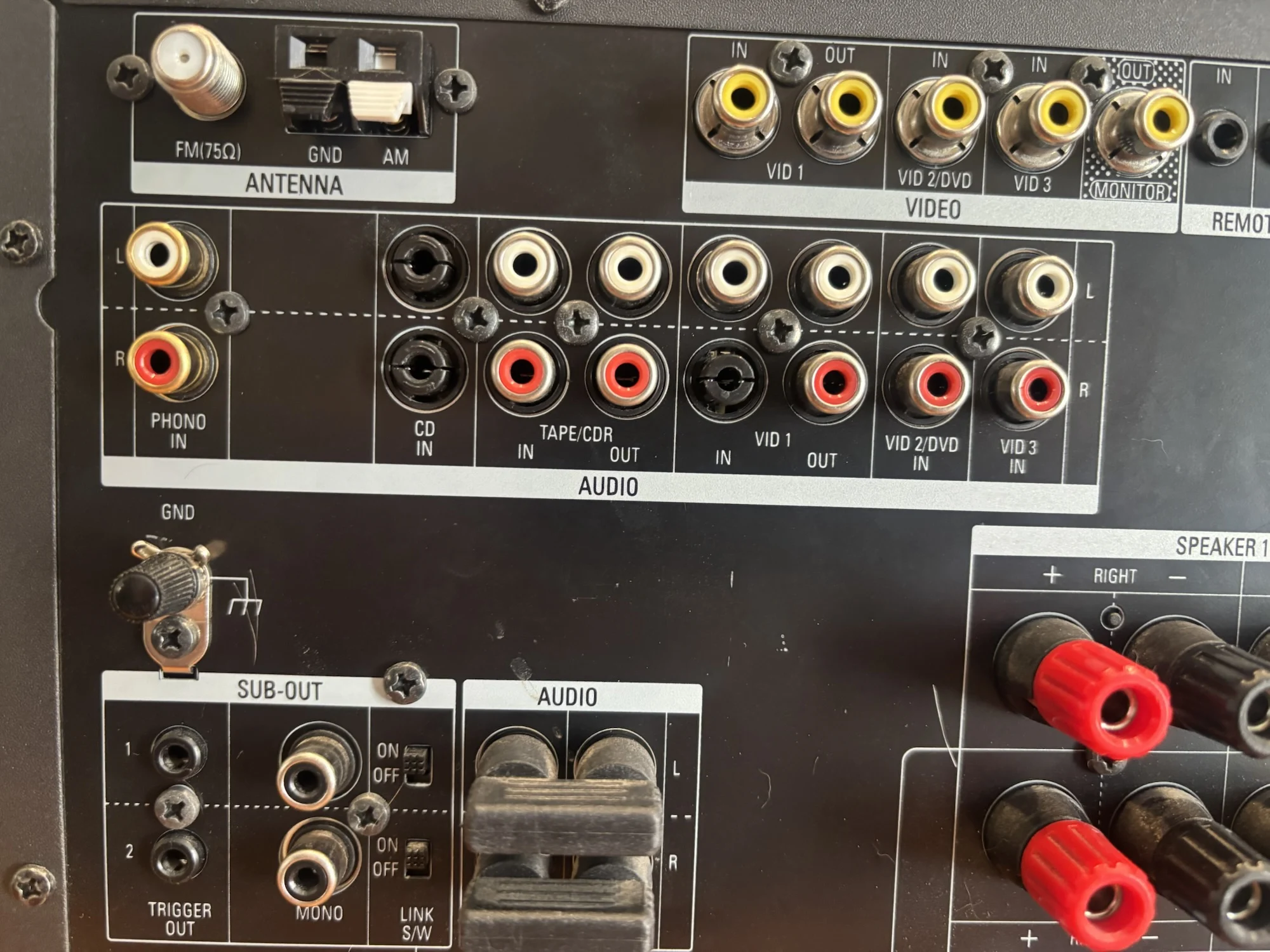
If you’re setting up a record player and staring at the back of your receiver wondering whether to plug into PHONO or AUX, you’re not alone.
This is one of the most common points of confusion in vinyl setups—especially because modern audio gear doesn’t always behave like vintage systems did.
Here’s the simple truth:
- PHONO = special input for turntables (with signal boosting)
- AUX = standard audio input (needs a boosted signal)
Understanding this difference is the key to getting clean, loud, distortion-free vinyl playback. Disclaimer: This post contains affiliate links. If you click and purchase a product, Rocky Mountain Records may earn a commission.
TL;DR
Every turntable setup needs one phono preamp somewhere in the signal chain. That phono preamp can be built into your receiver, built into your turntable, or added as a separate external component. If your receiver has a PHONO input, the preamp is already built in and you’re ready to go. If your receiver only has an AUX input, you’ll need either a turntable with a built-in phono preamp or an external phono preamp between the turntable and receiver. Just remember: you need one phono preamp—never zero, and usually not two.
What is a Phono Input?
A phono input is specifically designed for turntables. It does two important things:
1. Amplifies a very weak signal
Turntable cartridges produce an extremely low-level signal that is not strong enough for regular speakers or amps.
2. Applies RIAA equalization
Vinyl records are cut with a special EQ curve. The phono stage reverses that curve so the music sounds correct.
In short:
A phono input = built-in phono preamp inside your receiver
What is an AUX Input?
An AUX input (auxiliary input) is a general-purpose audio input. It is designed for devices like:
- Phones
- CD players
- Streamers
- TVs
But here’s the key difference – AUX does NOT amplify or equalize a turntable signal. So if you plug a turntable directly into AUX without a preamp, you’ll get:
- very low volume
- thin sound
- almost no bass
The Missing Piece: The Phono Preamp
This is where everything clicks. A phono preamp converts the weak turntable signal into a standard “line level” signal that AUX inputs understand. You need a phono preamp if:
- Your receiver does NOT have a phono input
- Your turntable does NOT have a built-in preamp
Phone preamps run the gamut on price. And which one you choose it really up to your budget and needs. Below are several phono preamps in a range of prices:
Turntables: Built-in Preamp vs No Preamp
Not all turntables are created equal.
Turntables WITH built-in preamp
These tend to be beginner-friendly and flexible. They typically allow you to plug directly into:
- AUX input
- powered speakers
- Bluetooth speakers (if supported)
Examples:
Usually include a “LINE/PHONO” switch
Turntables WITHOUT built-in preamp
More common in:
- higher-end turntable models
- audiophile setups
These require:
- phono input on receiver or amplifier OR
- external phono preamp
These setups often sound better—but require more components.
Receivers: Vintage vs Modern Reality
Receivers have changed quite a bit over time, and this is where things start to get interesting for anyone setting up a turntable. Vintage receivers from roughly the 1970s through the 1990s almost always included a dedicated PHONO input along with a built-in phono stage, which made vinyl setups essentially plug-and-play. You could connect a turntable directly without needing any extra gear. Modern receivers, however, are a different story. Many now remove the PHONO input entirely, assuming most users are focused on digital sources like streaming or Bluetooth. As a result, if you don’t see a PHONO input on the back of your receiver, you’ll need an external phono preamp in order to properly connect a turntable and get correct sound levels.
Down and Dirty Guide to Hook up a Turntable
Understanding the difference between PHONO and AUX inputs can save a lot of frustration when setting up a turntable. While the technology may seem confusing at first, it really comes down to one simple rule: every turntable needs a phono preamp somewhere in the signal chain. Whether that preamp is built into your receiver, your turntable, or added as a separate component, having the right setup ensures your records sound the way they were meant to. Once you know what equipment you have, connecting a turntable becomes much less intimidating and a lot more enjoyable.

Email Newsletter Sign Up
Get vinyl tips, Denver record store updates, stereo gear guides, and music nostalgia delivered to your inbox.
weekly popular