
The Complete Guide to Turntable Parts
What Every Component Does (And Why It Matters)
Whether you’re shopping for your first turntable, upgrading your current setup, or simply trying to understand the hobby better, learning the different parts of a turntable is one of the best investments you can make as a vinyl enthusiast.
A turntable may look simple from the outside, but dozens of components work together to transform tiny grooves in a record into music. Understanding what each part does will help you troubleshoot problems, make smarter upgrade decisions, and get the best sound from your vinyl collection.
This guide covers every major turntable component, from the cartridge and stylus to the plinth and tonearm.
Plinth (Base)
The plinth is the main body or base of the turntable. Everything else is mounted to it. Its primary job is to provide stability while minimizing unwanted vibrations.
Why It Matters
Vibrations are the enemy of vinyl playback. If the plinth resonates or flexes, those vibrations can be picked up by the stylus and turned into unwanted noise.
Common Materials
- MDF (medium-density fiberboard)
- Solid wood
- Acrylic
- Aluminum
- Composite materials
More expensive turntables typically use heavier and more rigid materials to better control vibration.
Platter
The platter is the rotating surface that supports your record.
The platter spins at a precise speed:
- 33⅓ RPM (most LPs)
- 45 RPM (many singles and EPs)
- 78 RPM (older records)
Why It Matters
A heavier platter often provides:
- Better speed consistency
- Greater rotational stability
- Reduced vibration
Common materials include:
- Aluminum
- Steel
- Acrylic
- Glass
Mat
The record mat sits on top of the platter and provides a surface for the record. This is not a required part of the system, depending on your set up. I have an acrylic platter that doesn’t require a mat – but, often they look pretty cool and they do provide the following functions:
Functions
- Reduces vibration
- Protects records
- Helps control static electricity
- Improves contact between record and platter
Common Materials
- Felt
- Rubber
- Cork
- Acrylic
Mat upgrades are popular because they’re inexpensive and easy to experiment with.
Spindle
The spindle is the small metal shaft in the center of the platter. The hole in the center of the record fits over the spindle to keep the record centered while spinning.
Why It Matters
Even slight off-center rotation can cause audible pitch fluctuations.
Motor
The motor provides the force that spins the platter. Most modern turntables use either:
AC Motors
Often found in belt-drive turntables.
DC Motors
Common in many modern designs and often electronically controlled for precise speed regulation.
Why It Matters
Motor quality directly affects:
- Speed accuracy
- Wow and flutter performance – this is either fast or slow fluctuations in speed.
- Noise levels
Belt or Direct-Drive System
Belt Drive
A rubber belt connects the motor to the platter.
Advantages:
- Excellent vibration isolation
- Often quieter
Disadvantages:
- Belts wear out over time
- Slightly slower startup
Direct Drive
The motor is connected directly to the platter.
Advantages:
- Instant startup
- Excellent speed accuracy
- Extremely durable
Disadvantages:
- More complex motor design
The good news? Both systems can sound excellent when properly engineered.
Tonearm
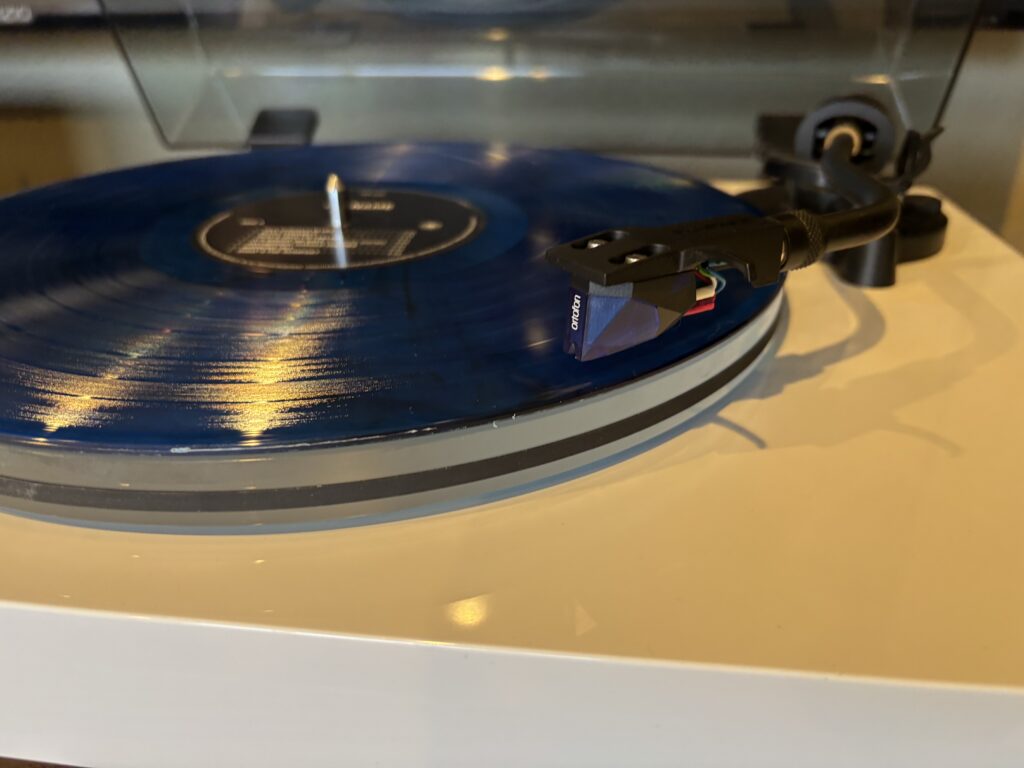
The tonearm holds the cartridge and stylus while allowing them to track the grooves.
It’s one of the most important parts of the entire turntable.
What It Does
The tonearm must:
- Move freely
- Maintain proper alignment
- Apply consistent tracking force
- Minimize resonance
Common Types
Straight Tonearms
Often found on modern turntables.
S-Shaped Tonearms
Popular on many classic and DJ turntables.
Both designs can perform extremely well when properly implemented.
Headshell
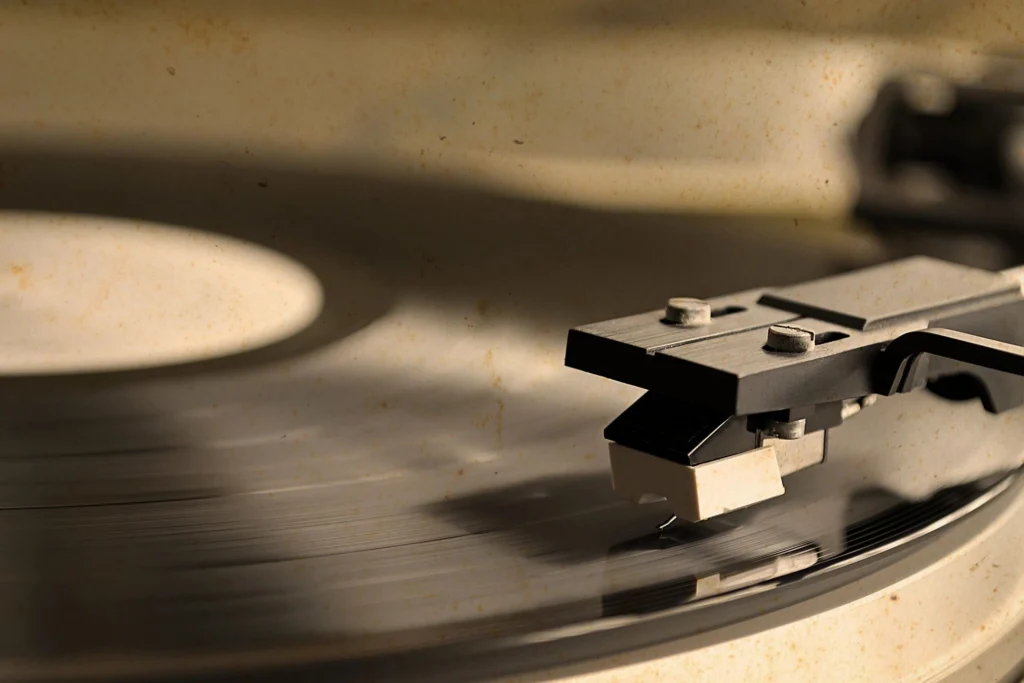
The headshell is the component attached to the front of the tonearm that holds the cartridge.
Fixed Headshell
Built into the tonearm.
Removable Headshell
Allows quick cartridge changes.
Many enthusiasts appreciate removable headshells because they make cartridge swaps much easier.
Cartridge
The cartridge is the heart of the playback system.
It converts physical groove movements into an electrical signal.
Think of It This Way
The stylus follows microscopic movements in the record groove.
The cartridge transforms those movements into music.
Types of Cartridges
Moving Magnet (MM)
Most common.
Advantages:
- Affordable
- Replaceable stylus
- Easy compatibility
Moving Coil (MC)
Often found in higher-end systems.
Advantages:
- Greater detail retrieval
- Lower moving mass
Disadvantages:
- Usually more expensive
- Stylus often not user replaceable
Stylus (Needle)
The stylus, often called the needle, is the tiny diamond tip that rides inside the record groove.
Why It Matters
The stylus is the only part of the entire system that physically touches your record.
A worn stylus can:
- Reduce sound quality
- Increase distortion
- Damage records
Common Stylus Shapes
Conical
- Least expensive
- Durable
- Forgiving
Elliptical
- Better detail retrieval
- Common upgrade choice
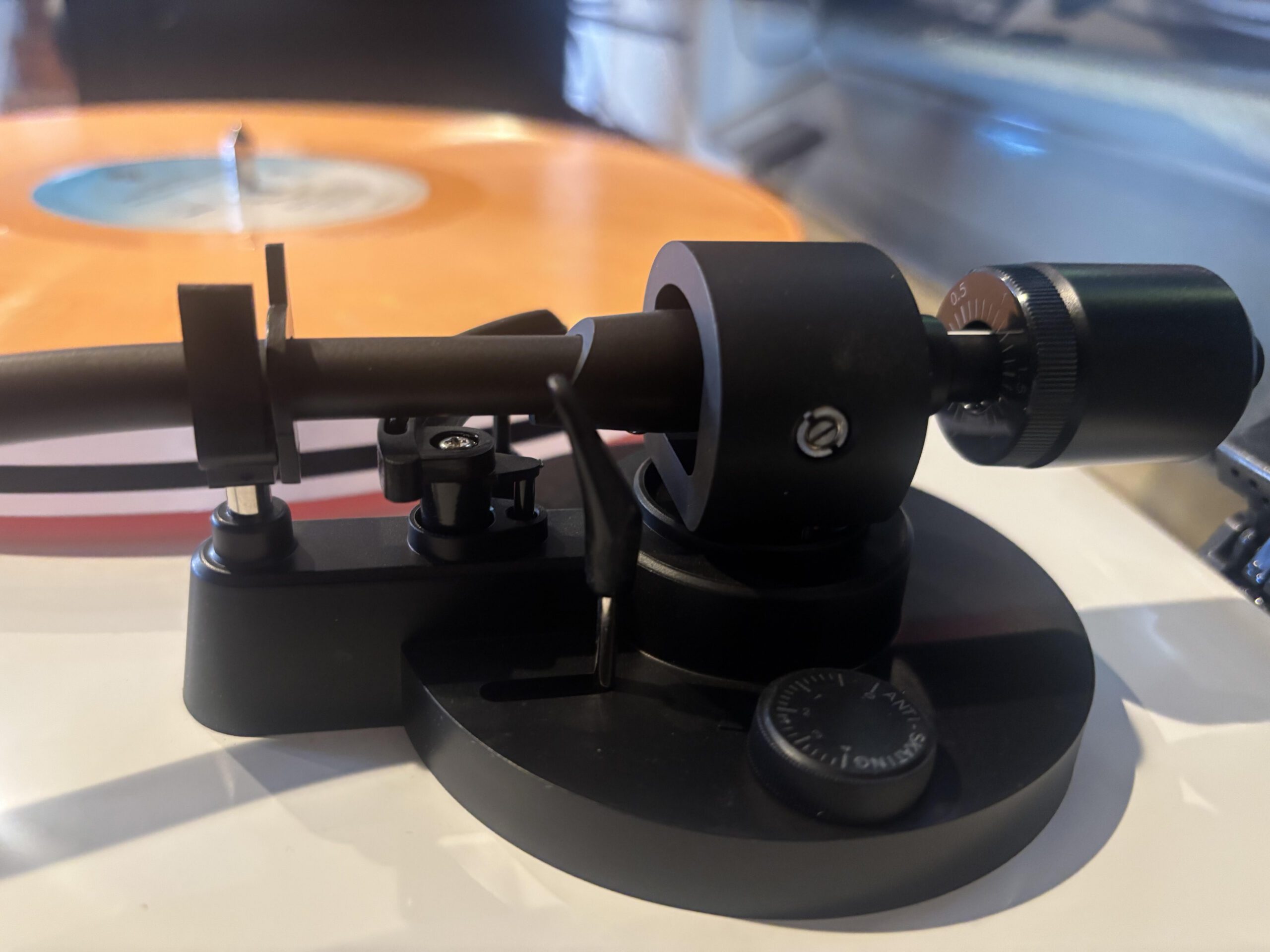
Counterweight
The counterweight sits at the rear of the tonearm.
Its purpose is to balance the tonearm and establish proper tracking force.
Tracking Force
Tracking force is the amount of downward pressure applied by the stylus.
Typical range:
- 1.5 to 2.5 grams
Too little force can cause skipping.
Too much force can increase record wear.
Anti-Skate Mechanism
As a record spins, natural forces pull the tonearm toward the center.
The anti-skate mechanism applies a small outward force to counteract this tendency.
Benefits
Proper anti-skate helps:
- Reduce uneven stylus wear
- Improve channel balance
- Improve tracking performance
Cue Lever
The cue lever raises and lowers the tonearm gently.
Why Use It?
Using the cue lever helps avoid:
- Dropping the stylus
- Scratching records
- Damaging the cantilever
Many experienced collectors use it every time they play a record.
Speed Selector
The speed selector allows you to switch between playback speeds.
Most modern turntables offer:
- 33⅓ RPM
- 45 RPM
Some also support:
- 78 RPM
Dust Cover
The dust cover protects the turntable from:
- Dust
- Pet hair
- Accidental contact
Common Debate
Should you play records with the dust cover open or closed?
The answer depends on the turntable and environment. For most beginners, either approach works fine, and the audible difference is often minimal.
Feet or Isolation System
Turntable feet help absorb vibrations from:
- Floors
- Speakers
- Furniture
Why It Matters
Footfalls and room vibrations can travel through furniture and reach the stylus.
Good isolation helps reduce unwanted feedback and rumble.
RCA Outputs
Most turntables connect to audio systems through RCA cables.
The red and white connectors carry:
- Right audio channel
- Left audio channel
Ground Wire
Many turntables include a separate ground wire.
Purpose
It helps prevent:
- Electrical hum
- Buzzing noises
If your turntable has a ground wire, connect it to the ground terminal on your phono preamp or receiver.
Phono Preamp
Many modern turntables include a built-in phono preamp.
What Does a Phono Preamp Do?
The signal produced by a cartridge is extremely small.
A phono preamp:
- Amplifies the signal.
- Applies RIAA equalization.
- Makes the signal compatible with standard audio inputs.
Without a phono preamp, records will sound extremely quiet and thin.
The Cantilever (Often Overlooked)
The cantilever is the tiny tube connecting the stylus to the cartridge.
When the stylus moves through the groove, the cantilever transmits those vibrations to the cartridge generator.
Materials
- Aluminum
- Boron
- Sapphire
- Ruby
The cantilever has a major influence on tracking ability and detail retrieval.
Bearings
Tonearms contain precision bearings that allow smooth movement.
High-quality bearings:
- Reduce friction
- Improve tracking
- Lower distortion
This is one reason why two turntables with similar cartridges can perform very differently.
Sub-Platter (Found on Some Models)
Some belt-drive turntables use a sub-platter hidden beneath the main platter.
The belt rides around the sub-platter instead of the visible platter.
Benefits
- Better speed consistency
- Easier manufacturing tolerances
- Common upgrade path on some turntables
Auto-Stop and Automatic Mechanisms
Some turntables include automatic features such as:
- Auto-stop
- Auto-return
- Fully automatic operation
Advantages
- Convenience
- Reduced stylus wear
- Great for beginners
Trade-Off
Manual turntables often have fewer moving parts and simpler designs.
Which Parts Matter Most for Sound Quality?
If you’re wondering where the biggest improvements come from, focus on these components first:
1. Cartridge and Stylus
The largest potential sound-quality upgrade.
2. Tonearm
Directly affects tracking accuracy.
3. Motor and Speed Stability
Critical for pitch accuracy.
4. Platter and Isolation
Help reduce vibration and resonance.
5. Phono Preamp
Can significantly affect clarity and dynamics.
Final Thoughts
A turntable is a surprisingly sophisticated machine. While dozens of parts work together to play a record, a few key components—the cartridge, stylus, tonearm, motor, and platter—do most of the heavy lifting.
The good news is that you don’t need to become an engineer to enjoy vinyl. Simply understanding the basics of how these parts work together will make you a more informed collector, help you avoid common mistakes, and make future upgrades much easier.
Whether you’re spinning records on an entry-level turntable or a high-end audiophile rig, every record starts the same way: a tiny diamond stylus tracing a groove and turning those microscopic movements into music.

Email Newsletter Sign Up
Get vinyl tips, Denver record store updates, stereo gear guides, and music nostalgia delivered to your inbox.
weekly popular