

Protect Your Vinyl Records
Vinyl Record Protection: How to Safely Store Your Collection for Decades
Building a vinyl collection is exciting – but storing it correctly is what keeps it sounding great years down the road. Records, though durable, are surprisingly sensitive to heat, pressure, dust, and even the wrong type of sleeve.
Along the way, I’ll mention a few sleeves, storage products, and accessories that I think are worth considering. Some of these links are affiliate links, meaning Rocky Mountain Records may earn a commission from qualifying purchases at no additional cost to you.
The good news is you don’t need expensive equipment or complicated systems to protect your collection. A few small upgrades—like better inner sleeves and proper outer covers—can make a huge difference. This guide covers how to store vinyl records properly, what to avoid, and the essential accessories that help preserve both sound quality and album condition.
Why Proper Vinyl Storage Matters
Vinyl records are durable, but not indestructible. Poor storage habits slowly degrade both the sound and physical condition of your collection.
Common types of damage:
- Warping from heat or improper stacking
- Surface scratches from low-quality sleeves
- Static buildup that attracts dust
- Ring wear on album covers
- Seam splits from pressure or tight packing
- Mold or mildew from humidity exposure
Once damage occurs, it’s usually permanent – especially warping and deep scratches.
Always Store Records Vertically
This is the most important rule of vinyl storage. Records should always be stored upright like books on a shelf. If possible, be sure to keep your records out of direct sunlight and away from any heat source.
Vertical storage matters:
- Prevents warping from weight pressure
- Keeps grooves from being distorted
- Makes records easier to handle safely
- Reduces long-term jacket damage
What NOT to do:
- Never stack records flat for long periods
- Don’t lean them at an angle without support
- Never pile records in uneven stacks
- Don’t cram or over pack records
Replace Both Inner and Outer Sleeves (Not Just One)
A lot of collectors focus on outer sleeves, but the real long-term protection comes from upgrading both inner and outer sleeves together. Think of it as a full “protective system” for each record.
Why Inner Sleeves Matter Just as Much
The inner sleeve is the first thing your vinyl touches—and unfortunately, many stock sleeves are not designed for long-term preservation.
Problems with stock inner sleeves:
- Paper fibers can cause fine surface scratches just from removing the record from the paper sleeve. This is why brand new vinyl often has light scratching
- Dust gets trapped inside over time
- Static buildup attracts debris to the grooves
- Seams can split and shed particles
- They often degrade as they age
Every time you remove or insert a record, friction between the vinyl and a low-quality sleeve can slowly create micro-damage that adds up over time.
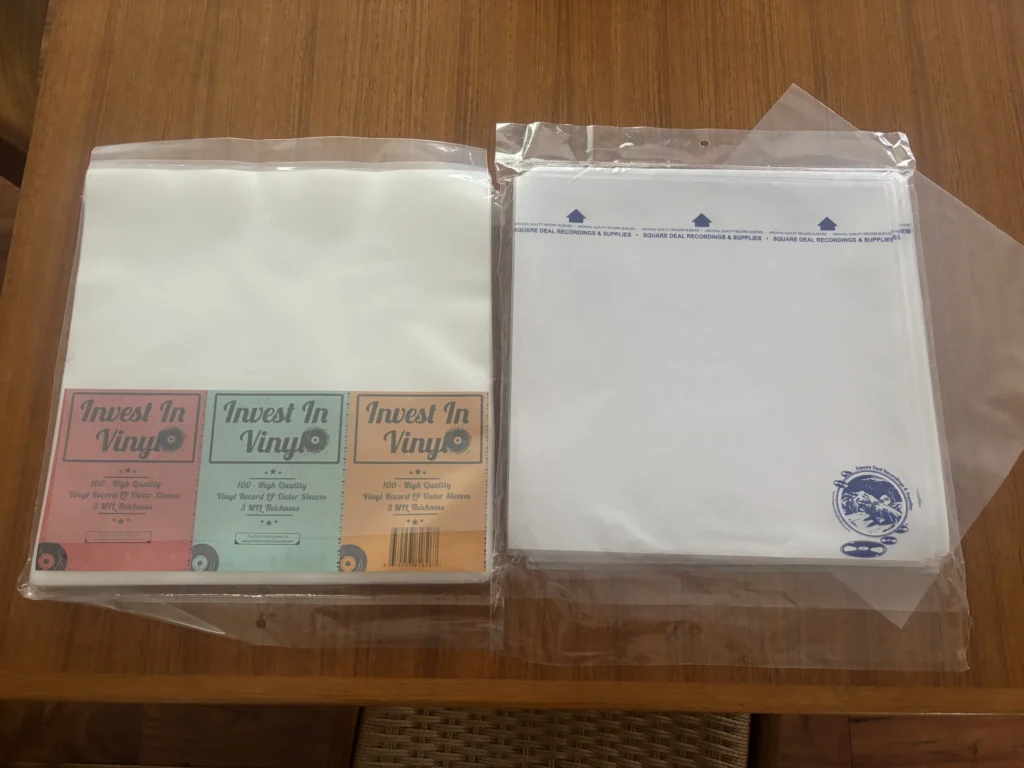
I use and recommend the following products:
Invest in Vinyl 100 LP Combo Pack: These are the ones I personally use, and highly recommend.
12 Inch Record Inner Sleeves – 3-Layers of Archival Quality, Anti-Static HDPE with Rice Paper Enclosed Insert for Extra Rigidity. Also a great product, and have purchased often over the years.
TL;DR
Proper vinyl storage comes down to a few simple habits: always store records vertically, avoid heat and humidity, and never stack them flat. Upgrade your inner sleeves to anti-static options to prevent micro-scratches and static buildup, and use outer sleeves to protect album jackets from wear, dust, and fading.
For best results, replace both inner and outer sleeves together—this creates a full protection system that keeps your records cleaner, safer, and in better condition for the long term.

Email Newsletter Sign Up
Get vinyl tips, Denver record store updates, stereo gear guides, and music nostalgia delivered to your inbox.
weekly popular