Beginner Turntable Guide for Vinyl Collectors
Turntables from Beginner to Mid Range
Looking to buy your first turntable but not sure where to start? Between suitcase record players, automatic turntables, phono preamps, cartridges, and endless online opinions, choosing a beginner-friendly record player can feel overwhelming.
The good news is that getting started with vinyl doesn’t have to be complicated or expensive. In this guide, we’ll walk through some of the best beginner turntables available today, explain the terminology you’ll encounter while shopping, and help you choose a record player that fits your budget and listening goals.
Entry Level Turntables
Buying your first entry-level turntable is really about balancing simplicity, reliability, and sound quality without overcomplicating the experience.
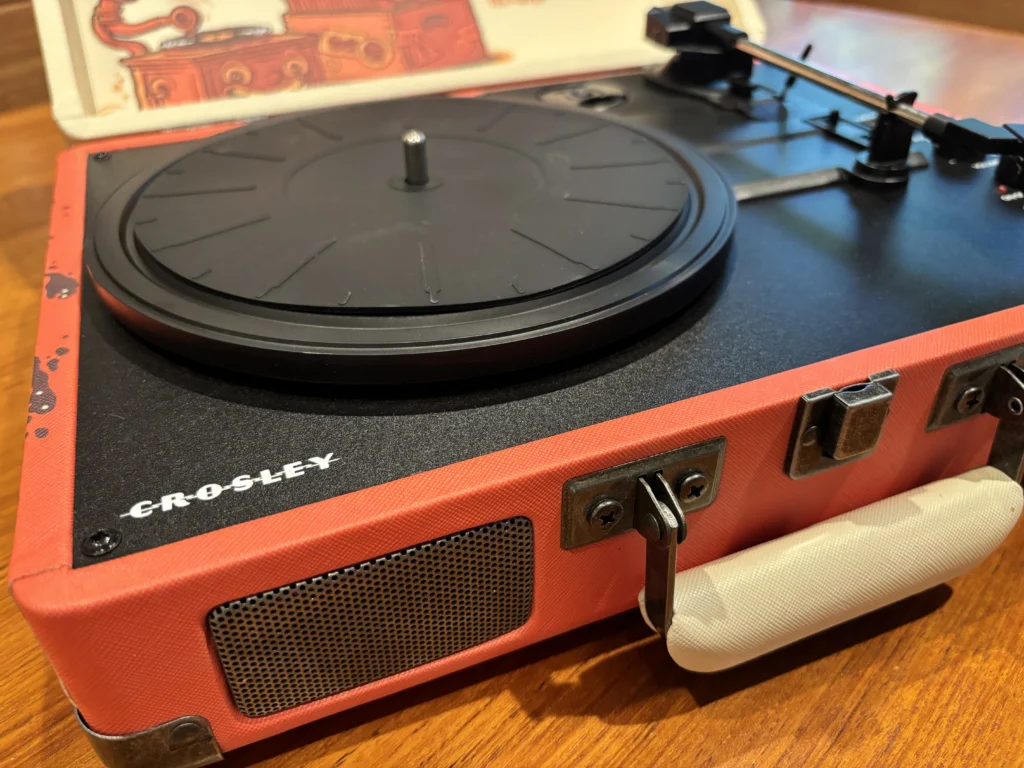
Many people begin with ultra-budget, all-in-one record players like Crosley-style units, which make it easy to start spinning vinyl right away and get familiar with the format. As listeners get more serious, they often move into traditional entry-level turntables in the $150 to $400 range, where build quality, tracking stability, and upgrade potential improve significantly.
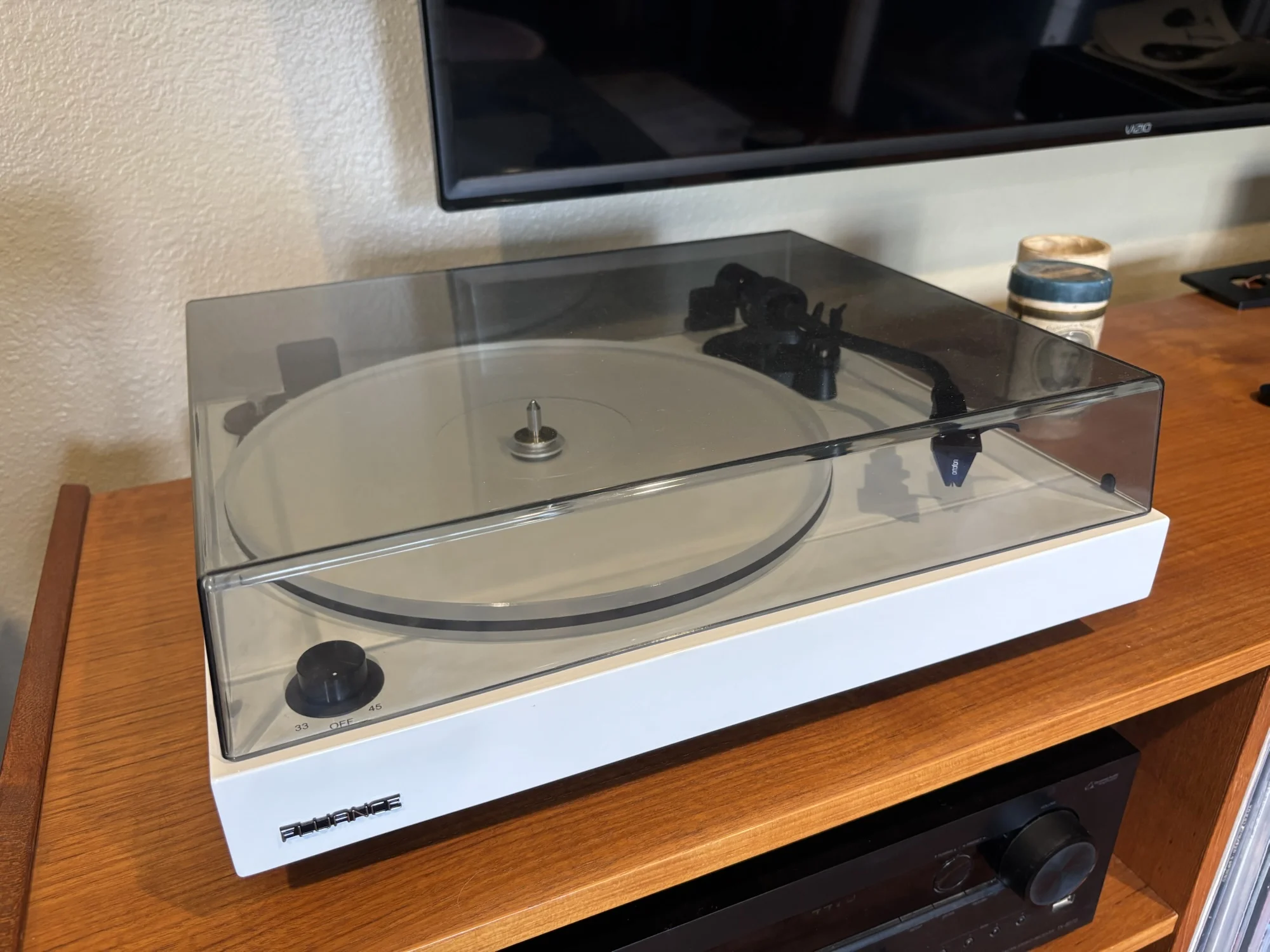
At the higher end of the entry-level spectrum – around $500 to $600 – you’ll find models like the Fluance RT85, which offer more refined components, better isolation, and a noticeably more detailed listening experience that can grow with your collection.
The key is choosing a setup that matches where you are now while still giving you room to upgrade later as your interest deepens..
Disclosure: This post contains affiliate links. If you make a purchase through these links, I may earn a commission at no additional cost to you. This is not a comprehensive turntable guide, but rather just some suggestions to get you into vinyl record collecting.
Budget: Crosley CR8005F-TN Suitcase Record Player
We’re going to begin with the absolute least expensive record player you would want to begin with:
Crosley CR8005F-TN Suitcase Record Player, All-in-One
This little record player can play 45 RPM, 33⅓ RPM, and 78 RPM records, and it comes with Bluetooth connectivity. Its built-in speakers can also stream digital music, and it includes RCA outputs and an auxiliary input.
This unit is for the budget-conscious person who wants to dip their toes into the world of vinyl. It’s inexpensive, easy to use, and it will play records. Expect to spend around $80.
Moving on, we’ll now focus on turntable that require powered speakers or some sort to amp or receiver. These will tend to be more expensive, but will be of higher quality and the sound reproduction is much better.
Beginner Turntable Under $250: Audio-Technica AT-LP60X
Audio-Technica AT-LP60X-GM Fully Automatic Belt-Drive Stereo Turntable
This turntable is the next step up, costing a bit more while offering improved performance and a built-in phono preamp that can be used with your existing home stereo or powered speakers.
It plays 45 rpm and 33⅓ rpm records and is a fully automatic belt-drive turntable. Fully automatic means you can simply press a button and the record will play. Once playback is finished, the tonearm automatically returns to its resting position.
You should expect to spend around $200 for this unit.
We’ll be getting into a much higher-end unit with the next turntable. It features a quality cartridge, a wood plinth, and a built-in phono preamp that allows it to work with home stereos or powered speakers.
Turntable Terms Every Beginner Should Know:
-
Phono preamp – Boosts the tiny signal from a turntable so it can be played through speakers or an amplifier; sometimes built in, sometimes external.
-
Plinth – The main body or base of the turntable that supports all the components and helps reduce unwanted vibration.
-
Platter – The spinning platform where the record sits during playback; its weight and stability can affect sound consistency.
-
Tonearm – The arm that holds the cartridge and stylus, guiding them across the record grooves.
-
Cartridge / Stylus – The cartridge houses the stylus (needle). The stylus physically tracks the record grooves and converts them into an electrical signal that becomes sound.
-
Fully automatic vs. manual – Fully automatic turntables lift and return the tonearm for you, while manual models require you to place and lift the tonearm yourself.
Upgradeable Turntable Under $400: Fluance RT81
Fluance RT81 Elite High Fidelity Vinyl Turntable Record Player
Now we’re talking! Fluance makes some of the best budget-friendly turntables on the market. You can also find quality turntable from U-Turn Audio and of course Audio Technia. But, Fluance is one of the turntables I recommend most often.
With the RT81, you get a high-performance cartridge, a solid wood plinth, and excellent sound quality thanks to the built-in phono preamp. While it’s not a fully automatic turntable, it does include an Auto Stop feature that stops the platter from spinning at the end of a record.
This is especially useful if you forget you started a record and walk away. It reduces unnecessary stylus wear and saves your cartridge from endlessly riding in the runout groove. You can disable the feature if you prefer, but most people leave it on. This turntable will set you back around $349 (there is also the lower level RT81 for $299) , but neither of these will need to upgraded anytime soon.
Why I Use & Recommend Fluance Turntables
Fluance is my most recommended brand for budget audiophiles. While there are plenty of excellent turntables available, I’m most familiar with Fluance because I own one myself. In fact, the turntable featured in the image on this page is my personal Fluance RT85 with an Ortofon Blue Cartridge. I believe it’s every bit as good as the Rega P1 that I’ve owned previously.
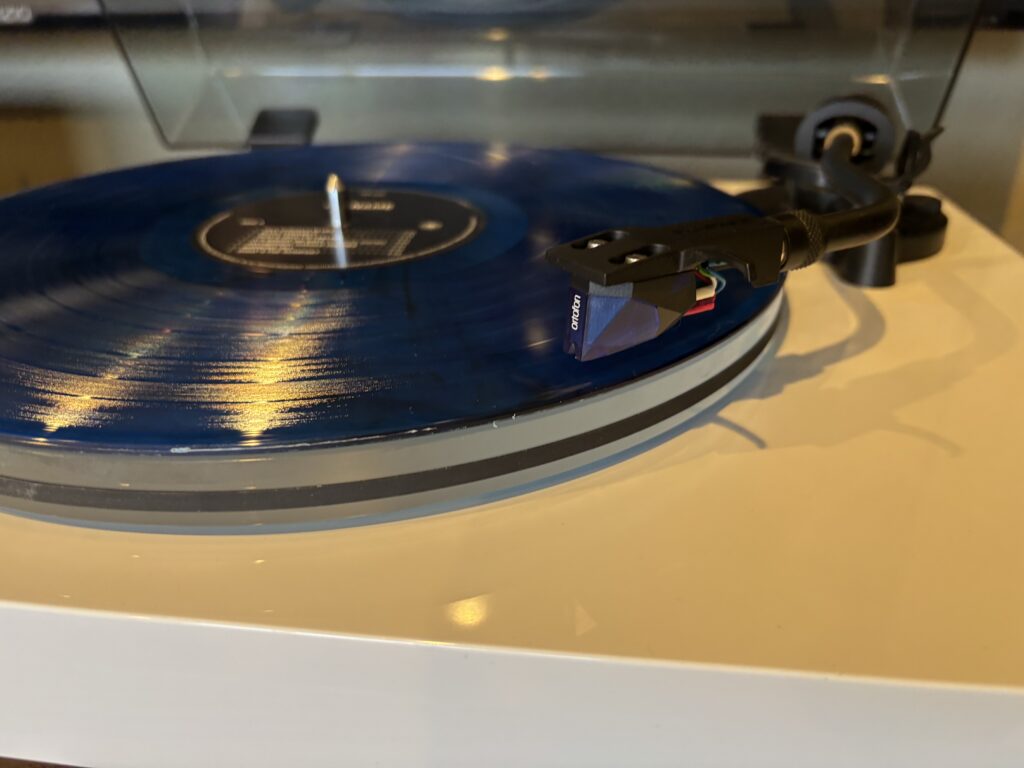
One of the best things about Fluance turntables is their upgrade path. You can start with an easy-as-can-be bundle that includes both speakers, pre-amp and turntable, grab a Bluetooth turntable or look at their higher quality turntables. As you move up the lineup, many components can be upgraded over time, including the platter and cartridge. This allows you to start with a more affordable model and gradually improve it as your budget allows, eventually approaching the performance of their flagship RT85. You can check out their entire lineup on their website or over at Amazon. Fluance just released the all new RT87 Turntable at around $799. It’s a pretty nice upgrade over the RT85 – but, you know…you pay for it.
Start Simple and Enjoy the Music
One of the biggest mistakes new vinyl collectors make is believing they need a perfect setup before they can enjoy records. The truth is that every collector starts somewhere. Whether you’re spinning records on a budget-friendly suitcase player or building a dedicated listening room around a higher-end turntable, the most important thing is simply getting started.
A good starter setup should be reliable, easy to use, and fit your budget. As your collection grows, you’ll naturally learn what matters most to you—better sound quality, upgraded speakers, a new cartridge, record cleaning equipment, or perhaps a larger collection of albums. The beauty of vinyl is that it can evolve alongside your interests.
Remember: buy the best turntable you can comfortably afford, pair it with decent speakers, keep your records clean, and focus on collecting music you actually love. The goal isn’t to impress audiophiles on the internet – it’s to create a listening experience that makes you want to pull records off the shelf and enjoy them.
Welcome to the hobby. Your wallet may never forgive you, but your ears probably will.
Email Newsletter Sign Up
Get vinyl tips, Denver record store updates, stereo gear guides, and music nostalgia delivered to your inbox.
weekly popular