Do Speaker Cables Really Make a Difference?
Upgrading Your Audio Setup Explained
If you’ve spent any time in the vinyl or home audio world, you’ve probably heard someone swear that upgrading speaker cables “completely changed everything.” Others will tell you it’s all nonsense. So what’s actually true? The short answer: speaker cables can make a difference—but usually not in the way marketing suggests.
Quick Note for the Audiophiles
This article is aimed at people building or improving a straightforward, entry-to-mid-level home audio setup—not ultra-high-end or heavily optimized audiophile systems. If you’re running a $2,000 turntable, debating silver-plated interconnects, or have strong opinions about Monster Cable vs. “oxygen-free unicorn copper,” you may already be operating in a different universe than what we’re talking about here.
No disrespect—this just isn’t that lane. This is more “get your system sounding good without overthinking it.”
What Speaker Wire Actually Does
Speaker wire has one job: carry an amplified electrical signal from your amplifier or receiver to your speakers with minimal resistance and interference.
That’s it.
In a properly designed system, speaker wire isn’t meant to enhance sound, it’s meant to stay out of the way. The goal is transparency, not coloration. Disclaimer: This post contains affiliate links. If a purchase is made, RMR may receive a small commission at not cost to you.
When Upgrading Speaker Wire Actually Matters
There are a few real-world situations where upgrading speaker cable can make a noticeable difference:
- Long cable runs (20–50+ feet or more)
- Very thin or low-quality wire with high resistance
- Power-hungry speakers or low-impedance (4 ohm) setups
- Damaged, corroded, or poorly terminated cables
In these cases, upgrading to a thicker gauge wire can reduce resistance and help the system perform more efficiently.
What Usually Doesn’t Change the Sound
For most home listening setups—especially short runs under 10–15 feet—moving from basic oxygen-free copper (OFC) wire to expensive “audiophile” cables typically does not produce a dramatic audible improvement.
If you’re already using properly gauged copper wire and solid connections, you’re likely already in the “transparent” range where gains are minimal.
Gauge Matters More Than Branding
Instead of focusing on branding, materials, or exotic marketing claims, pay attention to wire gauge:
- 16 AWG – fine for short runs
- 14 AWG – solid all-around choice – this is were I personally landed. I’ve bought hundreds of feet of this wire.
- 12 AWG – best for long runs or higher power systems
Lower number = thicker wire = lower resistance.
In most real-world setups, this matters far more than cable branding or price.
Banana Plugs: The Most Practical “Upgrade”
One of the simplest and most worthwhile improvements you can make isn’t about sound at all—it’s about usability: banana plugs.
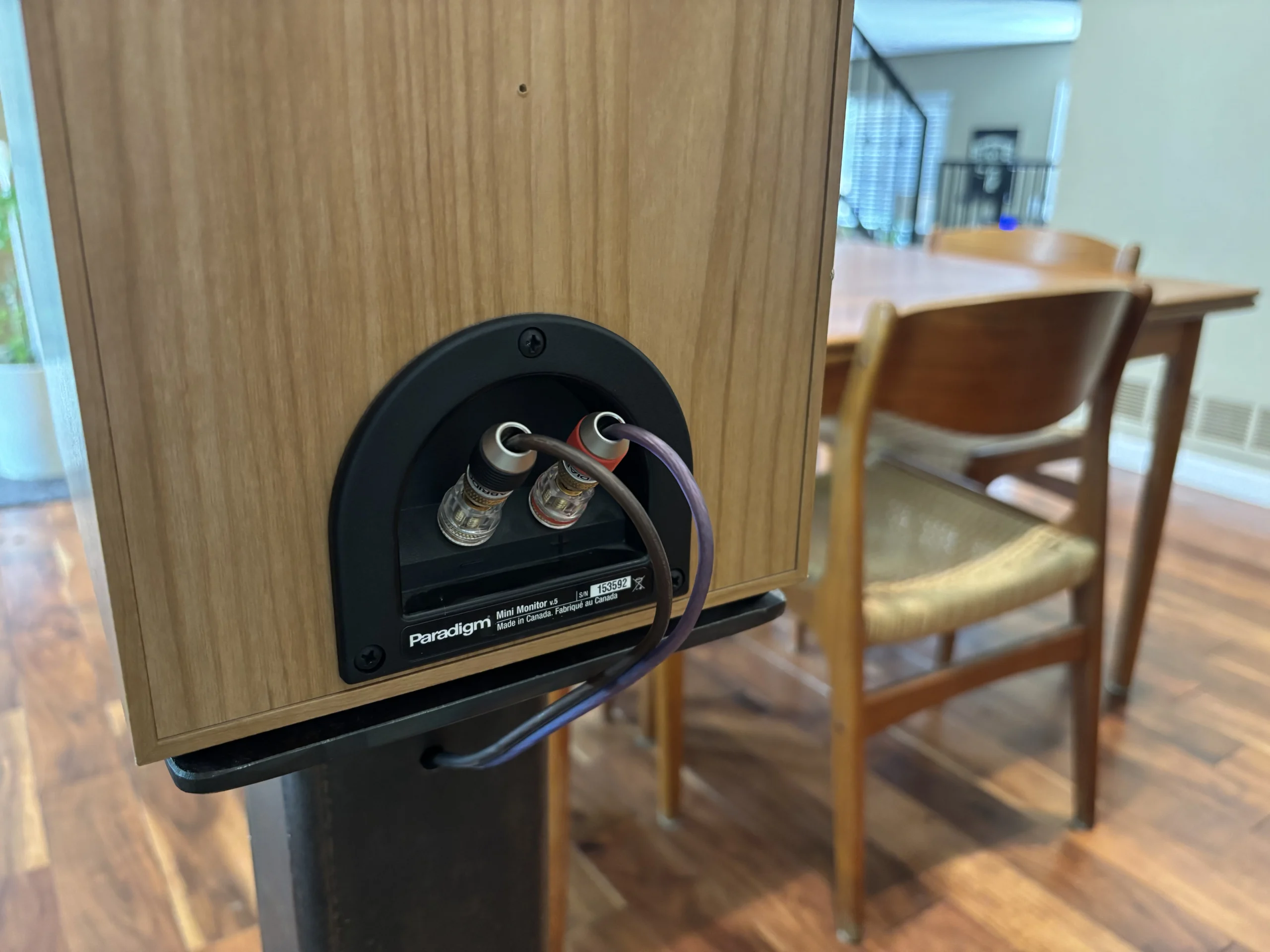
Banana plugs attach to the ends of your speaker wire and plug directly into your amplifier and speaker terminals. Instead of loosening and tightening bare wire every time you adjust your system, you get a clean, secure, plug-and-play connection. Please note: This type of plug works with more recent or modern receivers and amps, but probably not with vintage equipment.
Why they’re worth it:
- Much faster speaker swaps or system changes
- Easier testing and troubleshooting
- Cleaner, more consistent connections
- Reduces risk of stray wire strands causing shorts
- Makes setups look more organized
From a sound perspective, banana plugs don’t meaningfully improve audio quality on their own. But they do help ensure consistent, reliable connections—which indirectly supports optimal performance. I usually just grab the ones by Nakamichi. They’re pretty cheap and seem to work well.
Think of them as a convenience upgrade, not a sonic one.
Don’t Forget the Real Upgrades
If you’re trying to improve your vinyl or home audio sound, speaker wire is usually near the bottom of the list.
You’ll typically get much bigger improvements from:
- Speaker placement and room acoustics
- Upgrading speakers themselves
- Cartridge alignment and stylus condition
- Turntable isolation and setup
- Amplifier quality and headroom
The Bottom Line
Speaker cables matter—but only up to a point.
Once you’re using properly gauged copper wire with solid connections, diminishing returns kick in quickly.
In most systems, the biggest upgrade isn’t the cable—it’s everything around it.
Banana plugs are a perfect example of that idea: not glamorous, not hype-driven, but genuinely useful every time you touch your system.

Email Newsletter Sign Up
Get vinyl tips, Denver record store updates, stereo gear guides, and music nostalgia delivered to your inbox.
weekly popular