
What is Anti Skate on your Turntable?
If you’ve spent any time setting up a quality turntable, you’ve probably come across the term anti-skate. It’s one of the most misunderstood adjustments on a record player, yet it’s critical for getting the best sound from your vinyl collection while protecting your records and stylus.
Whether you’re using a vintage turntable for the 70s, setting up a modern turntable, or simply trying to understand why your cartridge seems to favor one channel over the other, understanding anti-skate is essential.
What Is Anti-Skate?
When a record spins, friction between the stylus and the groove naturally pulls the tonearm toward the center of the record. This force is called skating force.
Without some method of counteracting this force:
- The stylus presses harder against the inner groove wall.
- One stereo channel may sound louder or more distorted.
- Stylus and record wear increase.
- Tracking ability suffers, especially on difficult passages.
Anti-skate is simply a mechanism designed to apply a small outward force to the tonearm, balancing this inward pull.
When adjusted correctly, the stylus rides evenly between both groove walls, producing cleaner sound and reducing wear.
Why Is Anti-Skate Important?
A properly adjusted anti-skate system provides several benefits:
Better Sound Quality
Balanced pressure on both groove walls allows the cartridge to reproduce left and right channels more accurately, improving stereo imaging and reducing distortion.
Longer Stylus Life
Uneven pressure accelerates stylus wear. Correct anti-skate helps the stylus wear evenly over time.
Less Record Wear
Vinyl records are surprisingly durable, but excessive pressure on one groove wall can permanently damage the grooves.
Improved Tracking
Complex musical passages become easier for the stylus to track, reducing mistracking and skipping.
Different Types of Anti-Skate Systems
Manufacturers have developed several methods for applying this outward force over the years.
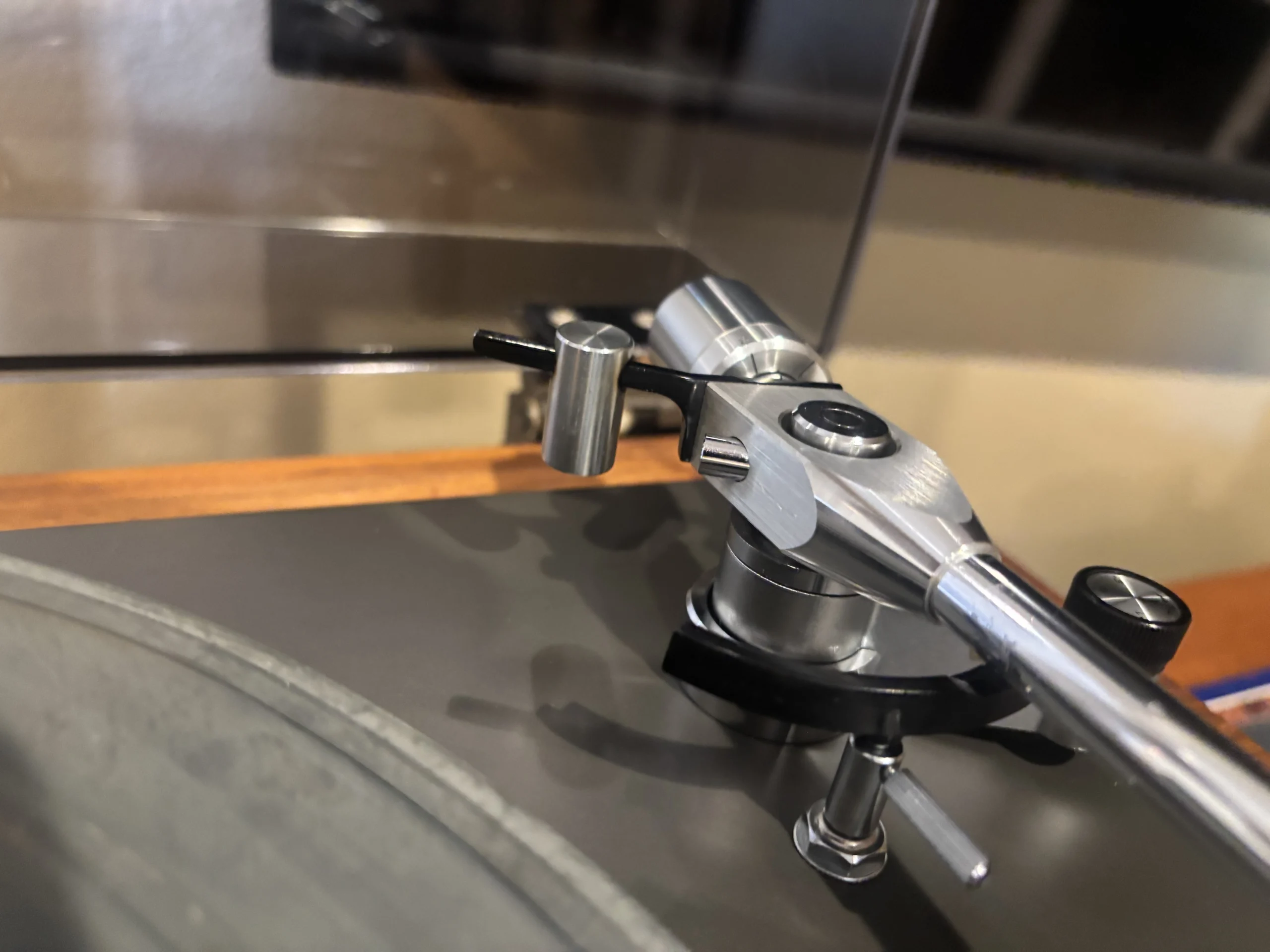
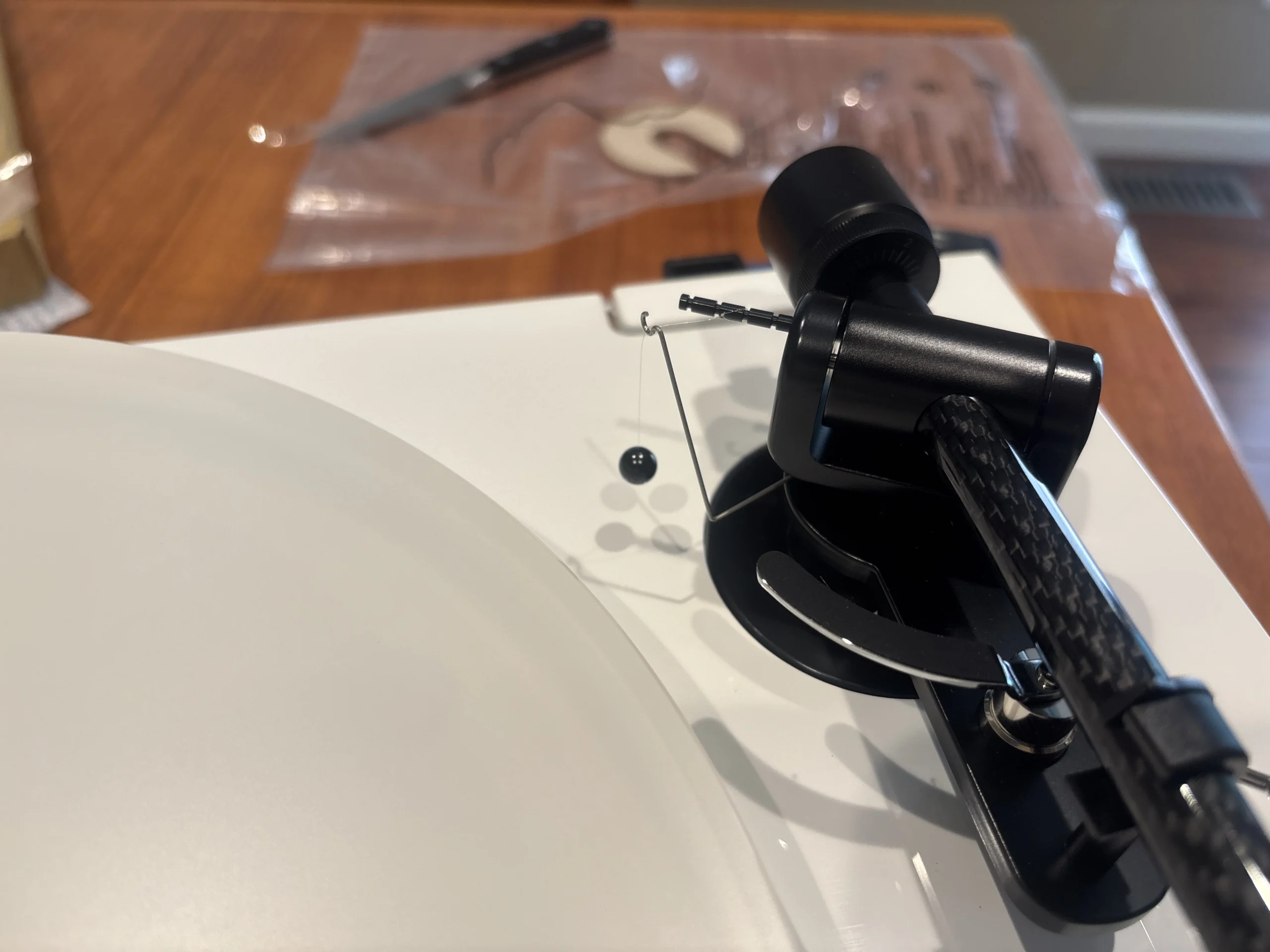
1. Hanging Weight and String System
This is one of the most respected and elegant anti-skate designs.
You’ll commonly find it on classic turntables from manufacturers like Pioneer, Thorens, and others.
A small weight hangs from a thin nylon string that loops over a tiny support arm. Different notches or positions allow the user to adjust the amount of anti-skate force.
Advantages
- Extremely consistent
- Virtually no mechanical friction
- Very reliable
- Rarely needs service
- Excellent long-term accuracy
Many vinyl enthusiasts consider the hanging weight design one of the finest anti-skate systems ever developed.
2. Spring-Based Anti-Skate
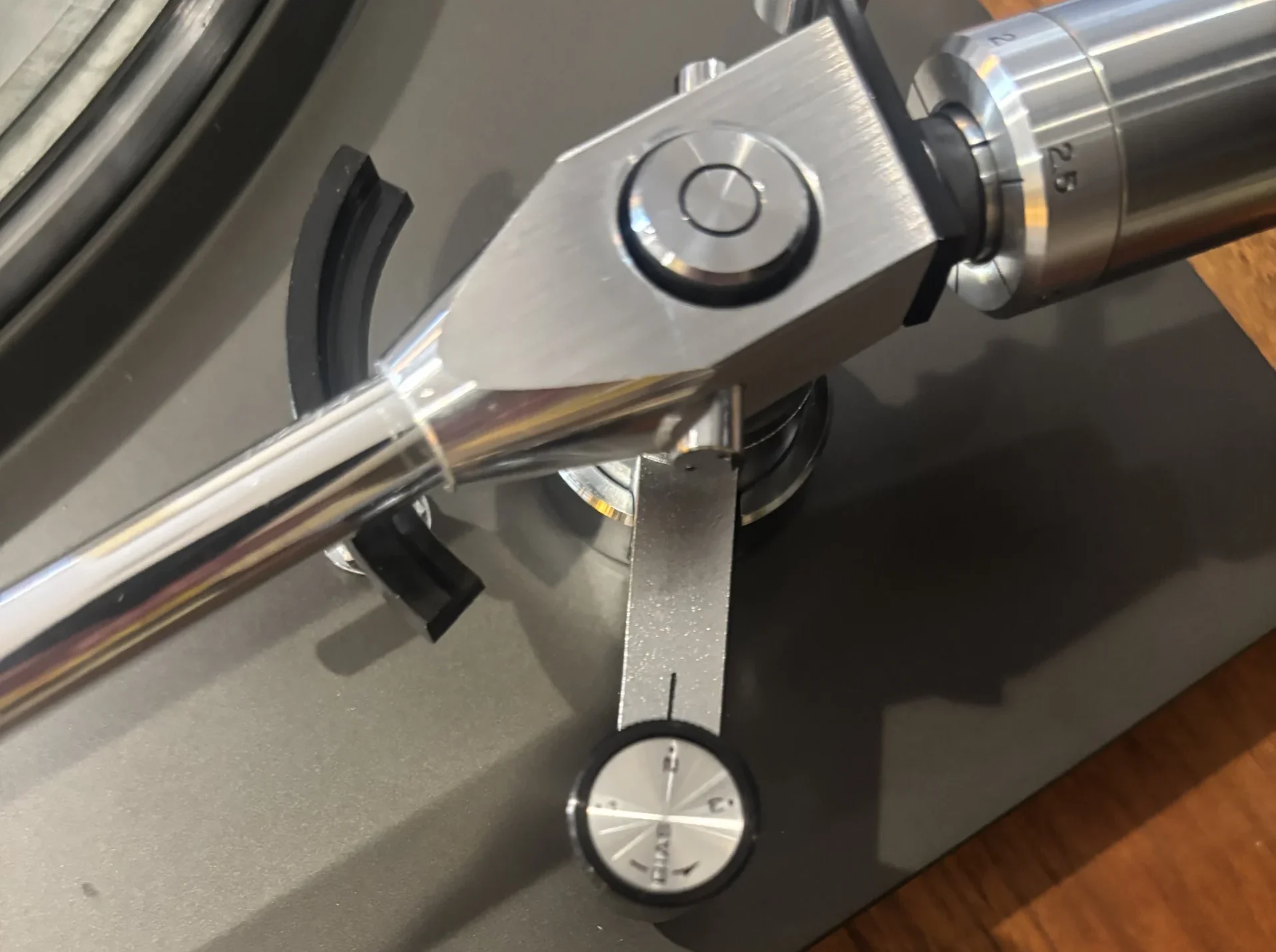
Many Japanese turntables from the 1970s and 1980s use a calibrated dial connected to a spring.
Turning the dial increases or decreases spring tension, applying outward force to the tonearm.
Advantages
- Easy to adjust
- Convenient front-panel control
- Common on many mid- to high-end turntables
Disadvantages
Over many decades, springs can weaken slightly, making calibration less precise than when new.
3. Magnetic Anti-Skate
Some higher-end manufacturers use magnets instead of springs or weights.
Magnets create a smooth, contact-free force on the tonearm.
Advantages
- No mechanical wear
- Very smooth operation
- Highly consistent
- Requires little maintenance
Magnetic systems are common on many premium modern turntables.
4. Anti-Bias Systems
Some manufacturers use the term anti-bias instead of anti-skate.
They’re accomplishing exactly the same goal.
Depending on the manufacturer, an anti-bias system may use:
- A spring
- A magnet
- A weight
- A combination of mechanisms
The terminology varies, but the purpose remains identical: balancing the inward skating force.
How Much Anti-Skate Should You Use?
A common starting point is to set the anti-skate value equal to your cartridge’s tracking force.
For example:
- Tracking force: 2.0 grams
- Anti-skate: 2.0
This isn’t a universal rule, but it’s an excellent place to begin.
Fine adjustments can then be made by listening for balanced sound or using a test record.
Can You Run Without Anti-Skate?
Technically, yes.
Many inexpensive record players have little or no anti-skate adjustment.
However, if your turntable includes an anti-skate mechanism, it’s there for a reason.
Using it properly helps maximize:
- Sound quality
- Stylus life
- Record life
- Tracking performance
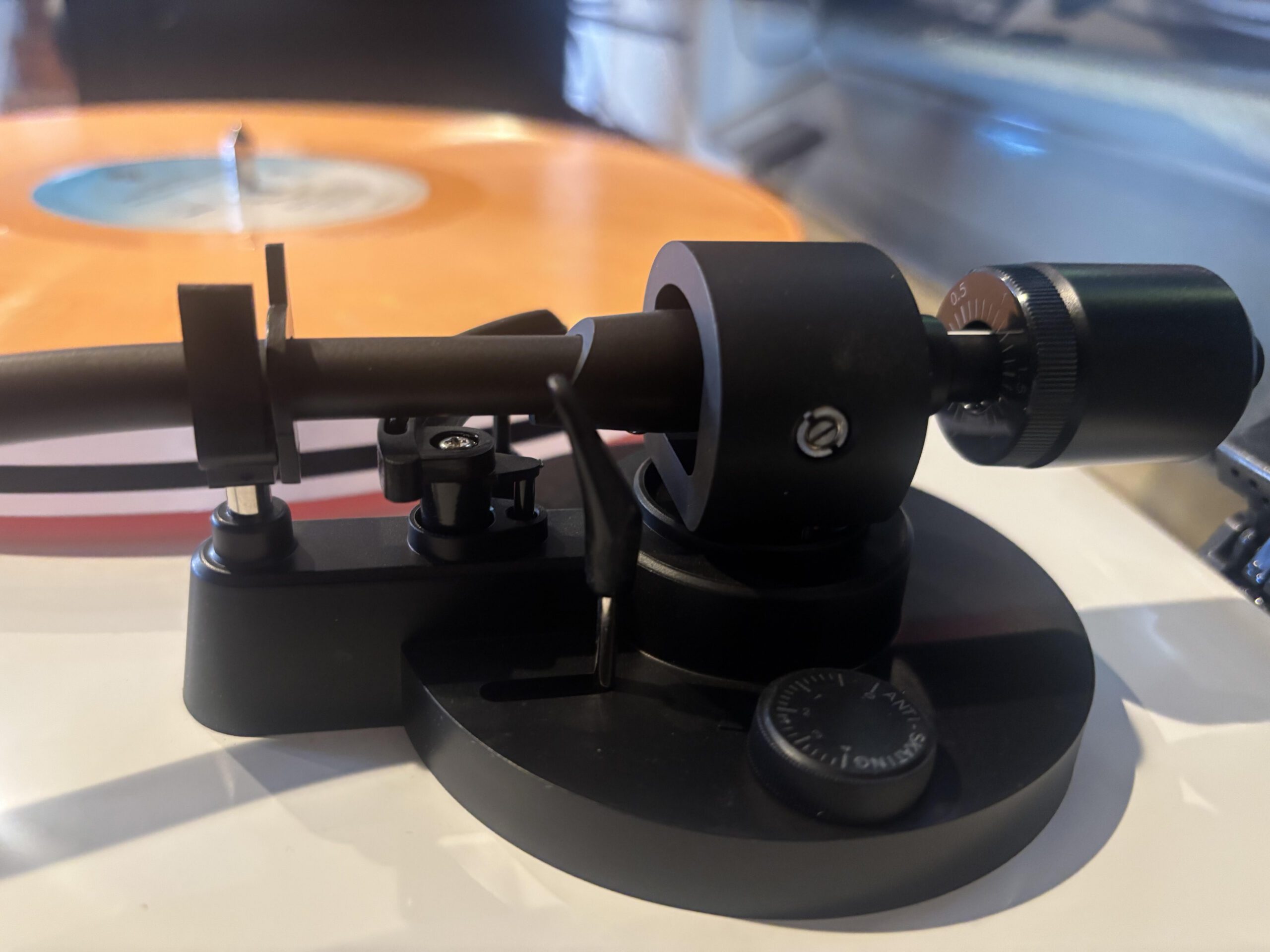
Anti-skate may seem like a small adjustment, but it has a significant impact on vinyl playback.
Whether your turntable uses a hanging weight, a spring-loaded dial, a magnetic system, or what the manufacturer calls an anti-bias mechanism, the goal is always the same: keeping the stylus centered in the groove.
Taking a few minutes to understand and properly adjust anti-skate can reward you with cleaner sound, better stereo balance, longer stylus life, and better protection for your cherished record collection.

Email Newsletter Sign Up
Get vinyl tips, Denver record store updates, stereo gear guides, and music nostalgia delivered to your inbox.
weekly popular