
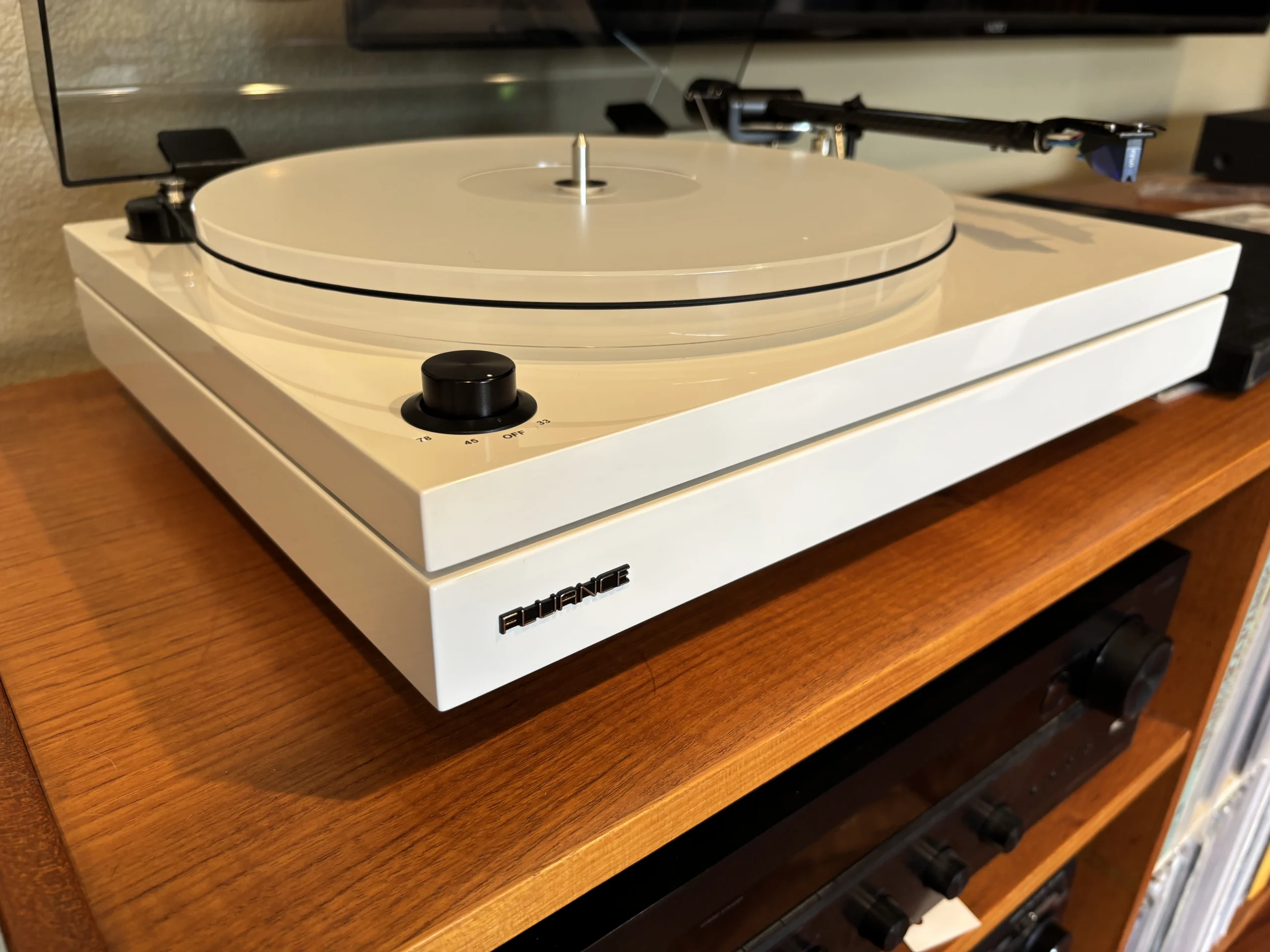
Fluance RT87 Review: Is the Upgrade Over the RT85 Worth It?
I’ve owned and absolutely loved my Fluance RT85 with the Ortofon 2M Blue cartridge for several years. It’s one of those rare pieces of gear that just disappears into the music—it looks great, sounds even better, and honestly never gave me a reason to upgrade. I constantly recommend Fluance turntables, at all levels, but the RT85 was, and still is, a fantastic deal.
Then, on June 15th, Fluance dropped the RT87
So, I did what any financially irresponsible-but-audiophile-curious person would do: I sold my old setup (and a few other things, a record shelf and some speakers) and used the funds to step up to Fluance’s new flagship. Now I’ve had some time with it, and the short version is this: it sounds amazing. But whether it’s $250 better than the RT85?… that’s where things get interesting. And just a heads up, some of the links on this page are affiliate links, and if clicked, RMR may earn a small commission.
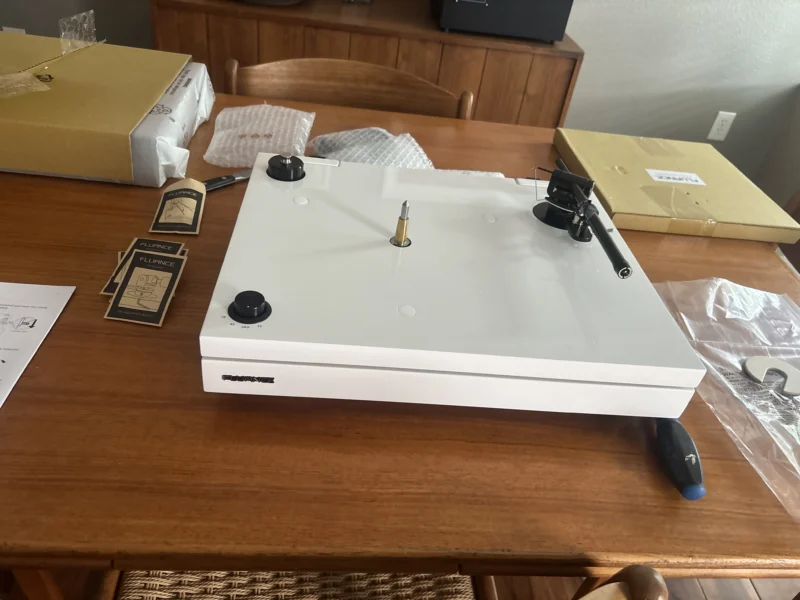
What’s Actually New on the RT87?
Fluance didn’t just tweak the RT85 with a few updates – they rebuilt the foundation in a few key ways. This isn’t a minor or cosmetic refresh; it’s a completely new platform. From the redesigned dual-layer plinth and upgraded isolation feet to the new carbon fiber tonearm and revised anti-skate system, nearly every part that influences performance has been considered. If you’re curious what the RT87 costs or want to see the available finishes, you can check the current price on Amazon below.
Dual-Plinth Isolation System
Instead of a single plinth like the RT85, the RT87 separates the motor and tonearm into two physically decoupled layers. The idea is simple: keep vibration from the motor and environment away from the stylus as much as possible. The plinth comes in three different color options, white (obviously), black and natural walnut.
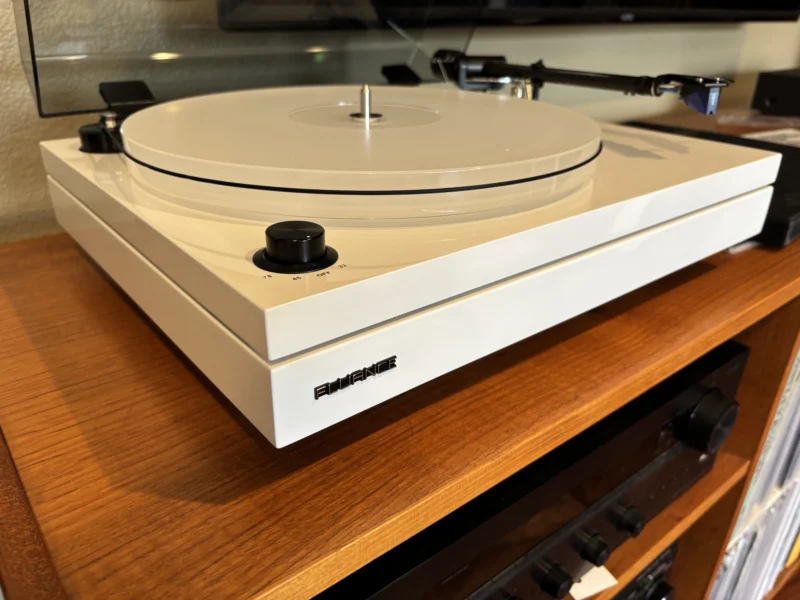
In theory, this lowers the noise floor and improves clarity and imaging. I can’t quantify that, and I didn’t hear a night-and-day difference. The RT85 already sounded excellent, and any improvements here are more in the realm of refinement than revelation.
Carbon Fiber Tonearm with VTA Adjustment
The new carbon fiber tonearm is lighter and more rigid than the RT85’s S-arm. Less mass means less unwanted resonance making its way into the cartridge, allowing it to track the groove of your records more accurately. This isn’t just a specification on a feature list, it’s something you can actually hear. Expect cleaner, more detailed sound, improved instrument separation, and a more focused stereo image, especially on well-recorded albums. In my opinion, this could be the greatest improvement over the RT85.
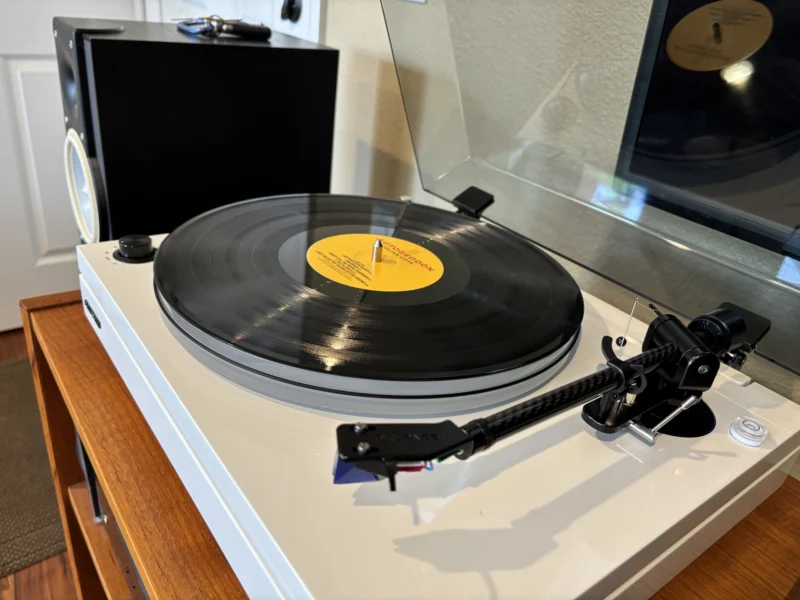
The added VTA (vertical tracking angle) adjustment is also a big deal if you like dialing in cartridges properly. The RT85 always felt a bit “set and forget.” The RT87 feels more like a platform you can actually fine-tune. In reality, I like the fact that this is a feature, but honestly, I’ll probably never really use it. I don’t swap cartridges, so for my listening habits it’s more of a “nice to have” than a must-have feature. Even so, it adds flexibility and makes the RT87 a turntable you can grow into rather than grow out of.
Weight-Based Anti-Skate System
Instead of a dial like you’ll find on most of Fluance’s turntables, the RT87 uses a hanging weight for anti-skate – learn more about Anti Skate here. And aside from just looking cool, it’s a system that has been around the block…it’s actually one of the older, more traditional ways of handling anti-skate, and it’s still used today because it’s simple and effective.
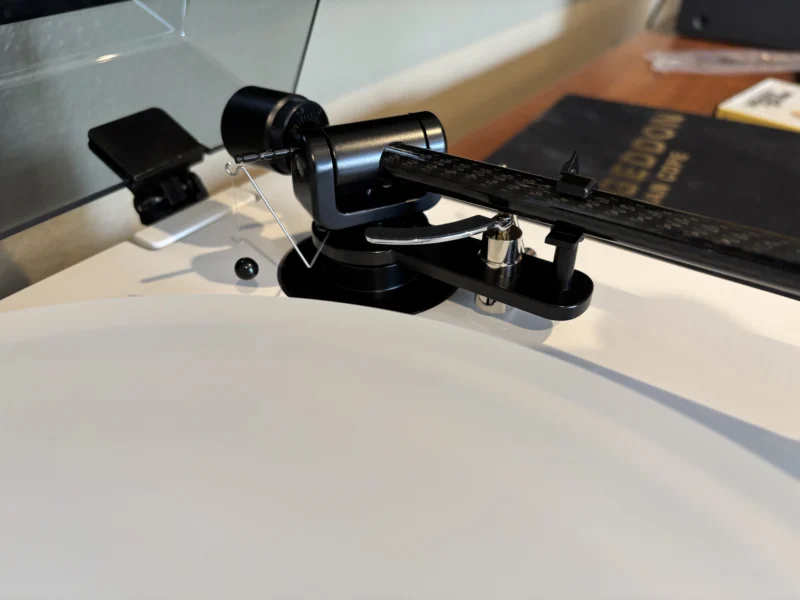
It looks old-school (almost like a lab experiment), but it’s actually a very consistent mechanical solution. No guessing, no markings – just physics doing the work.
4.1 lb Acrylic Platter
Heavier and thicker than the RT85’s platter, this adds rotational stability and improves vibration damping.
Whether it’s measurable or not in a real-world setup is debatable, but it does contribute to that sense of “effortless” playback.
Dual-Plinth Vibration Control
This is the headline engineering change. Motor on one isolated layer, tonearm on another. This is where Fluance is clearly trying to move beyond “very good $500 turntable” territory into something closer to entry-level audiophile separates.
Sound: Better… but how much?
This is the tricky part. The RT85 with the Ortofon 2M Blue already punches way above its price. So the RT87 isn’t a night-and-day upgrade, it’s more like refinement on an already very mature sound.
What I’m hearing:
- A quieter background between notes
- Slightly better separation in busy passages
- A more “solid” center image
- Tighter, more impactful bass, even with my sub turned off
- And just a bit more detail retrieval in the highs
But here’s the honest truth:
Some of that could absolutely be the new cartridge, some of it could be expectation bias, and some of it might be real engineering improvements stacking together. So… is it worth the extra $250? This is where I’m still conflicted. If you already own an RT85 with a 2M Blue, you are not “missing” anything essential. That setup is still absurdly good value and arguably the sweet spot in Fluance’s entire lineup.
What I Didn’t Like: Many reviews mention that the belt feels a bit cheap or flimsy, and I don’t disagree—it does. But that’s not my biggest issue. Because the belt is round instead of flat, it doesn’t seem to grip the platter as well. Every time I remove a record, I end up accidentally pulling the belt off with it. Maybe I just have large hands or my fingers catch the edge of the platter, but it’s happened often enough to become genuinely annoying. It’s a small thing, but when you’re swapping records regularly, having to put the belt back on every few albums takes away from the otherwise premium experience. I am going to research to see if I can swap out the round belt for a flat one. Stay tuned.
The RT87 is:
- More refined
- More adjustable
- More isolated
- More “future-proof” as a platform
But it is not a dramatic sonic leap.
Worth it? Absolutely.
I love it. That’s the simplest answer. I love the way it looks. I love the way it sounds. The tonearm is cool and the hanging weight antiskate takes me back to a more vintage feel. It looks more premium, feels more engineered, and absolutely sounds excellent. But I can’t honestly say it transforms the experience in a way that makes the RT85 obsolete.
It’s less of an upgrade and more of a move into a slightly more serious tier of the same hobby.
Bottom line: you really can’t mess up buying the RT85. It’s still ridiculously good.
That said, if the RT87 upgrades speak to you and feel worth the extra $250—go for it. It’s not a life-changing difference, but it is a more refined, more dialed-in version of an already great table.
I’ll eventually line it up against a friend’s RT85 and do a proper side-by-side comparison – and I’ll update at that time. Bottom line, you can’t go wrong with either the RT85 or the RT87.

Email Newsletter Sign Up
Get vinyl tips, Denver record store updates, stereo gear guides, and music nostalgia delivered to your inbox.
weekly popular