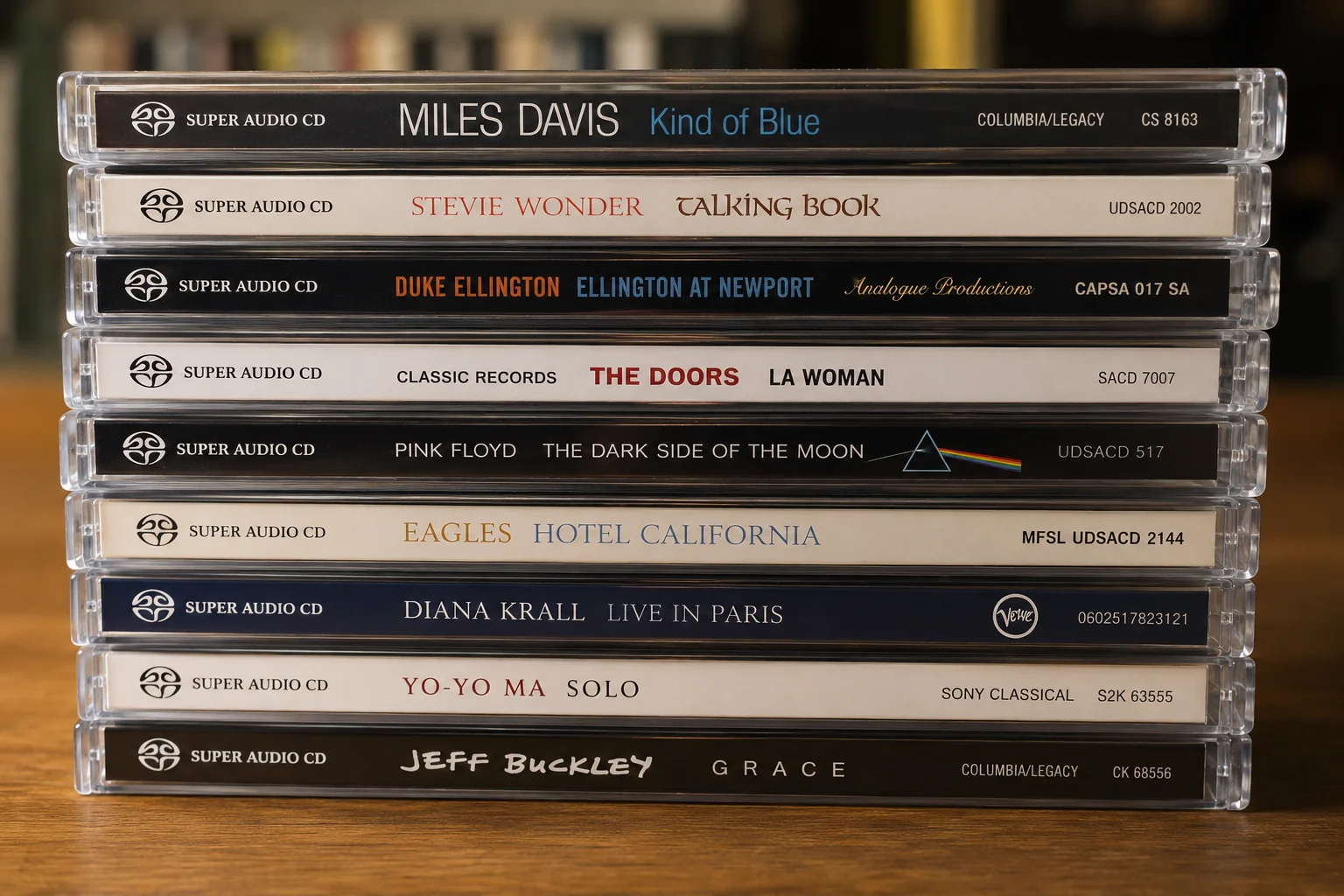
What Is an SACD? Why Super Audio CDs Are Making a Comeback
If you thought CDs had disappeared, think again. While vinyl records have enjoyed years in the spotlight, another physical music format has quietly been gaining momentum among audiophiles: the Super Audio CD, better known as the SACD.
Originally introduced more than two decades ago, SACDs never became mainstream. Today, however, they’re enjoying renewed interest from serious music lovers who want the highest-quality digital sound possible. With major labels continuing to release new titles and collectors seeking out rare editions, SACDs have become one of the most respected formats in high-end audio. Disclosure: Some of the links on this page are affiliate links, and if clicked, RMR may earn a small comission. That said, what exactly is an SACD, and is it worth adding to your collection?
What Is an SACD?
A Super Audio CD (SACD) is a high-resolution optical disc developed by Sony and Philips in 1999 as the successor to the standard compact disc. Unlike a traditional CD, which stores music using 16-bit/44.1 kHz PCM (Pulse Code Modulation), an SACD uses a different technology called DSD (Direct Stream Digital).
The result is a digital recording capable of reproducing more detail, greater dynamic range, and a smoother, more natural presentation that many listeners describe as being closer to analog tape or vinyl. Now, back in the day, the format never really took off, as they cost more (and CDs were already overpriced), required a new, expensive SACD-compatible player, and the amount of SACD titles released was pretty anemic. And then, the MP3 hit, so CD sales in general began to wane. That said:
An SACD can hold:
- Stereo high-resolution audio
- Multi-channel surround sound (5.1)
- Hybrid discs that also include a standard CD layer
The hybrid design is one reason SACDs remain popular. You can play the CD layer in any CD player while enjoying the high-resolution DSD layer on an SACD-compatible player.
How Does SACD Sound?
Whether SACD sounds “better” than a standard CD is one of audio’s longest-running debates.
On a quality audio system (and this is kind of the rub, you need a pretty nice system to reap the benefits), many listeners notice:
- Greater instrument separation
- More natural vocals
- Wider soundstage
- Lower background noise
- Better dynamics
- More realistic acoustic instruments
The improvements tend to be subtle rather than dramatic. If you’re listening through Bluetooth earbuds or inexpensive speakers, you probably won’t hear much difference.
However, on a dedicated stereo system with quality speakers or headphones, SACDs can be remarkably impressive.
Why Are SACDs Becoming Popular Again?
Several factors are fueling renewed interest in the format. And, as is often the case, this page contains affiliate links that if clicked, RMR may earn a commission at not cost to you. Just fyi.,,
Audiophile-quality releases
Labels like Mobile Fidelity, Analogue Productions, SHM-SACD, and Audio Fidelity continue releasing carefully mastered albums sourced from original analog tapes whenever possible.
For many collectors, these represent the best digital versions ever produced.
Physical media resurgence
As streaming becomes increasingly compressed and temporary, many music lovers are returning to physical formats they actually own.
Just like vinyl, SACDs offer permanence, collectible packaging, and a listening experience that’s intentional rather than disposable.
Better equipment
Modern DACs and universal disc players make SACD playback easier than ever. Many players from companies like Marantz, Yamaha, Denon, and Esoteric support SACD alongside regular CDs.
Jazz and classical music enthusiasts
Some of the largest SACD catalogs are found in jazz and classical music. Labels such as Blue Note, Telarc, Pentatone, BIS, and Deutsche Grammophon continue to produce outstanding high-resolution releases.
Do You Need a Special SACD Player?
Yes. The high-resolution DSD layer cannot be read by a standard CD player. However, many SACDs are hybrid discs, meaning they also include a normal CD layer.That means:
- Regular CD player → plays only the CD layer
- SACD player → plays both the CD layer and the high-resolution SACD layer
Many Blu-ray and universal disc players also support SACDs.
Can You Rip an SACD?
Unlike standard CDs, SACDs include copy protection that makes ripping more difficult. It is possible using certain compatible hardware and software, but it’s far more complicated than ripping a regular CD. For most collectors, SACDs are intended to be enjoyed through dedicated playback equipment.
Are SACDs Still Being Made?
Absolutely. Although they never achieved mass-market success, SACDs continue to be released every month. Popular genres include:
- Jazz
- Classical
- Progressive rock
- Classic rock
- Blues
- Vocal performances
Many new releases are limited editions that become collectible once they sell out.
Are SACDs Worth Collecting?
If you enjoy owning physical music and have a good stereo system, SACDs can be incredibly rewarding. Collectors appreciate them because they often feature:
- Superior mastering
- Premium packaging
- Limited production runs
- Excellent resale value
- High-resolution audio unavailable on streaming services
Some rare SACDs have become surprisingly valuable, selling for hundreds of dollars on the used market.
Best Artists to Experience on SACD
Some recordings consistently receive praise from audiophiles.
Popular SACD recommendations include:
- Miles Davis
- Steely Dan
- Pink Floyd
- Fleetwood Mac
- Norah Jones
- Diana Krall
- The Rolling Stones
- The Police
- Dave Brubeck
These albums are often used to demonstrate high-end stereo systems because of their exceptional recording quality.
The Future of SACD
Streaming dominates today’s music industry, but SACDs occupy a unique niche. For listeners who value sound quality above convenience, they remain one of the finest digital formats ever developed.
While SACDs will probably never replace streaming or standard CDs, they’re likely to remain popular among collectors and audiophiles for years to come.
If you’ve already invested in a quality stereo system, exploring SACDs may be one of the easiest ways to hear your favorite albums at their very best.
Email Newsletter Sign Up
Get vinyl tips, Denver record store updates, stereo gear guides, and music nostalgia delivered to your inbox.
weekly popular