
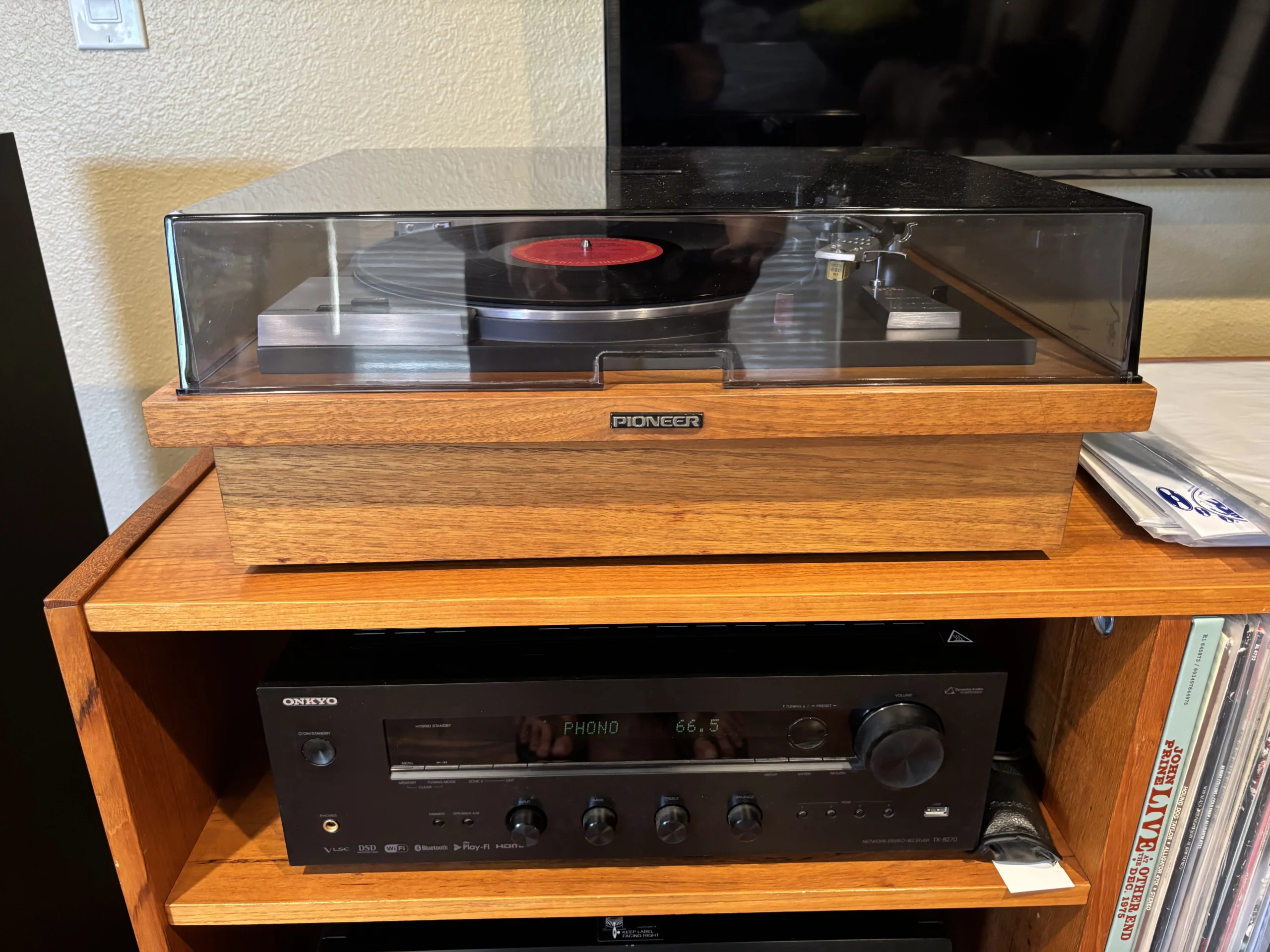
Pioneer PL-50: It’s Built Better Than Many Modern Turntables
Back in the mid- to late-90s, I bought my first serious stereo system at an auction. It consisted of three pieces that, at the time, felt like the ultimate hi-fi setup: a Pioneer PL-50 turntable, a Pioneer SX-828 receiver, and a pair of Pioneer CS-99 speakers. I spent countless hours listening to records on that system. And then, for one reason or another, I sold it.
At the time, it seemed like the practical decision – I was moving a lot, the components were heavy, and they were also becoming worth a lot of money. Still, looking back, it remains one of those sales I’ve regretted ever since. If you’ve been collecting audio equipment long enough, you probably understand that feeling. Most gear comes and goes without much emotion. But every collector has one piece they wish they’d never let leave. For me, it was the Pioneer PL-50.
Sometimes the best piece of vintage audio isn’t the rarest one. It’s the one you’ve been trying to find again for the past 25 years.
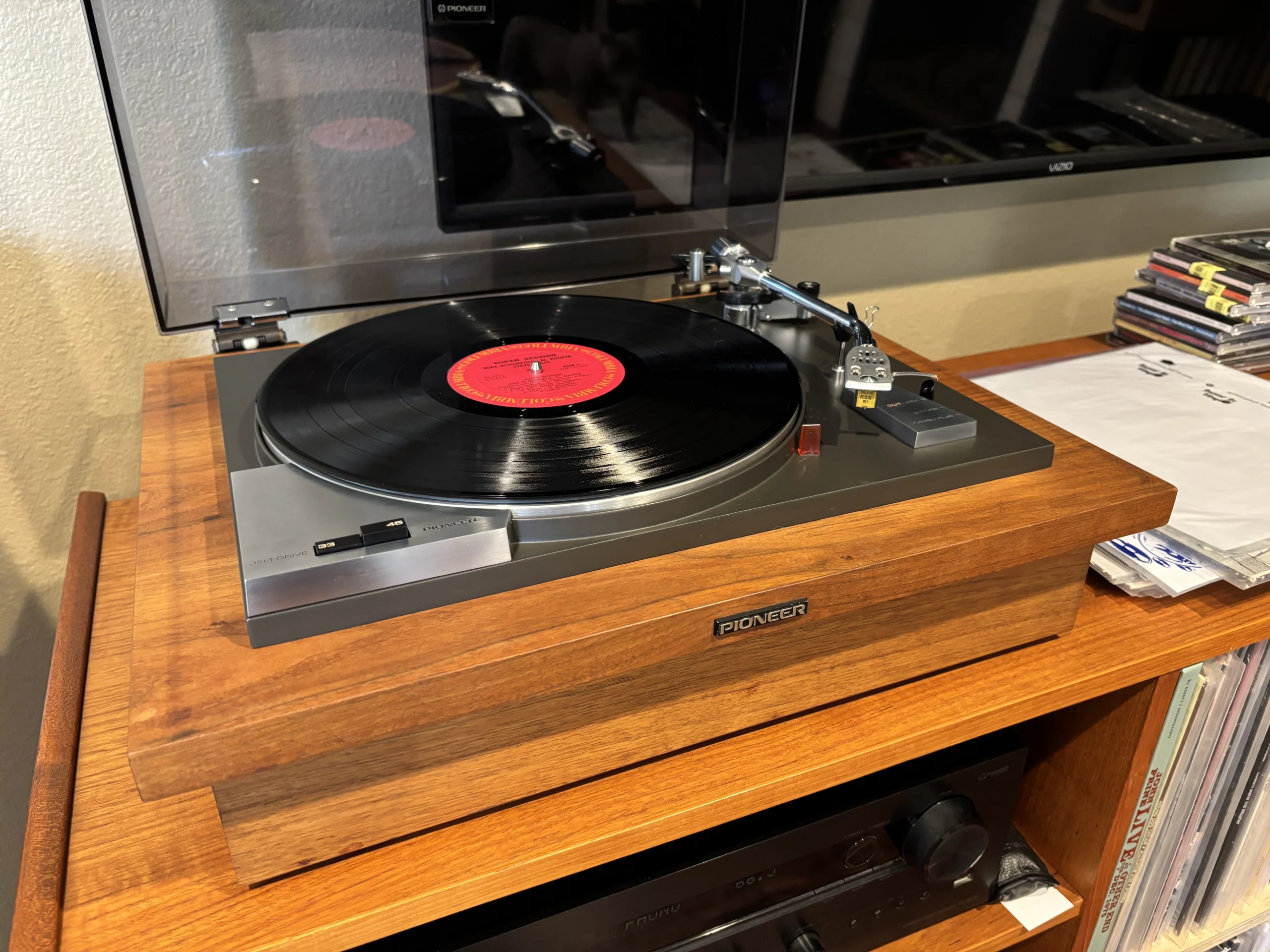
I’ve seen them posted online here and there over the years, but they were always too expensive. So when one appeared for sale on marketplace recently for a great price – in remarkably original condition – I didn’t hesitate. As I carried it into the house, I realized I wasn’t simply buying another turntable. I was bringing home a small piece of my own history. And after spending time with it again, I remembered exactly why I missed it so much. As you may know if you read this Blog, I recently purchased the brand new Fluance RT-87 and have been very impressed with the deck (with a few gripes) – you can learn more about that in my Fluance RT87 Review. I’ll eventually do a comparison between the two.
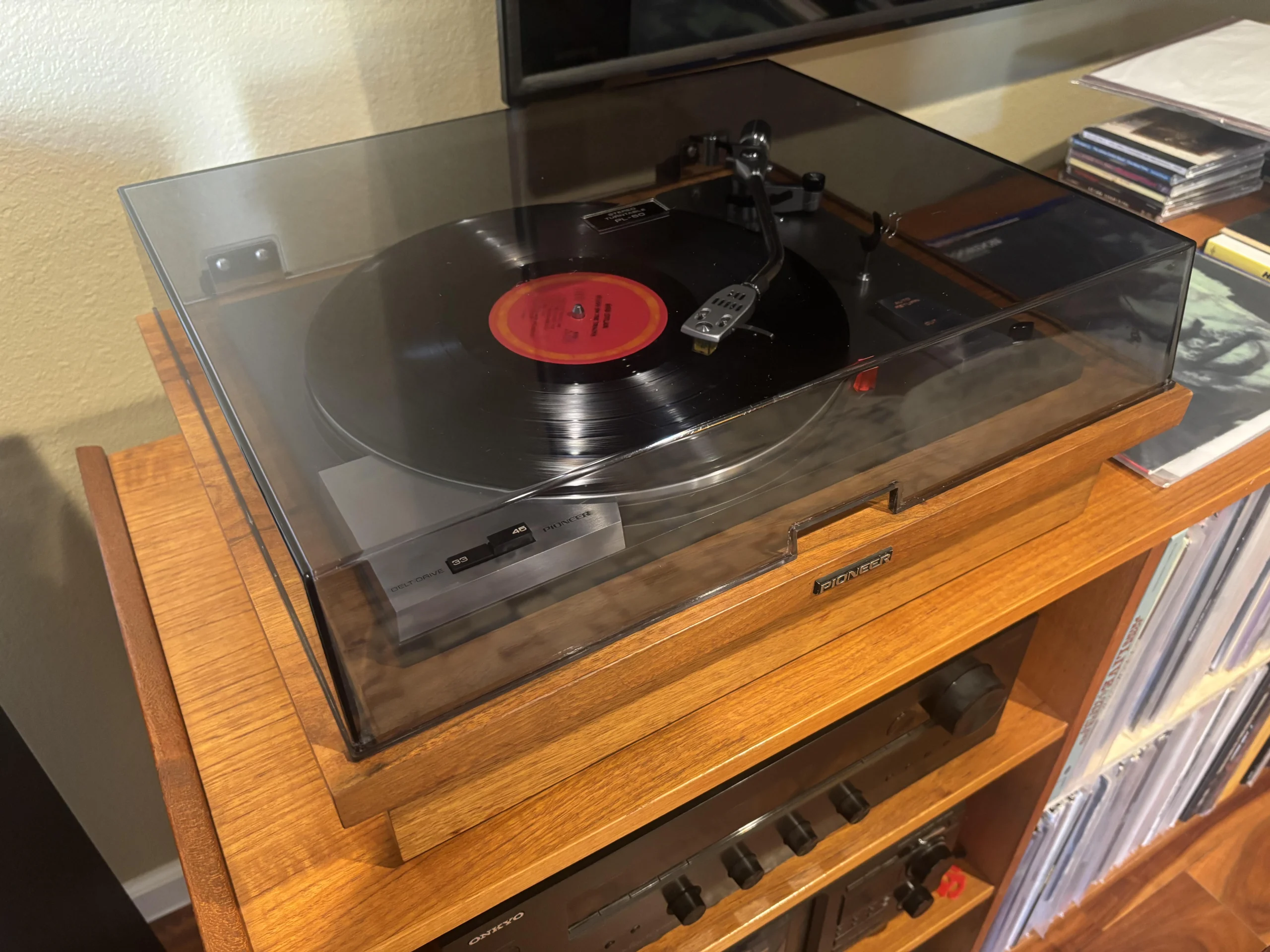
The Golden Age of Japanese Hi-Fi
The early 1970s represented one of the most exciting periods in home audio history. Companies like Pioneer, Sansui, Kenwood, Yamaha, Sony, and Technics weren’t simply competing on features. They were competing on engineering excellence.
Manufacturers invested heavily in research, materials, machining, and quality control. Heavy platters weren’t marketing gimmicks – they improved rotational stability. Walnut wasn’t selected because it looked luxurious; it also provided a rigid, well-damped foundation that helped minimize unwanted resonance.
During this era, Pioneer earned a reputation for producing beautifully engineered equipment that balanced performance, reliability, and understated elegance and the PL-50 is one of those products.
More Than a Turntable
The Pioneer PL-50 wasn’t purchased by itself back in the 1970s. It was part of an era when people assembled complete stereo systems one component at a time.
My first set up consisted of:
- Pioneer PL-50 turntable
- Pioneer SX-828 receiver
- Pioneer CS-99 speakers
And over time, I sold them all (and shipping those speakers was no joke!) Looking back, I didn’t appreciate what I had. Today, that combination has become something of a time capsule – a reminder of just how serious Japanese hi-fi manufacturers were about quality during the golden age of stereo. It’s funny how perspective changes. I would love to rebuild that exact set up, and time will tell.
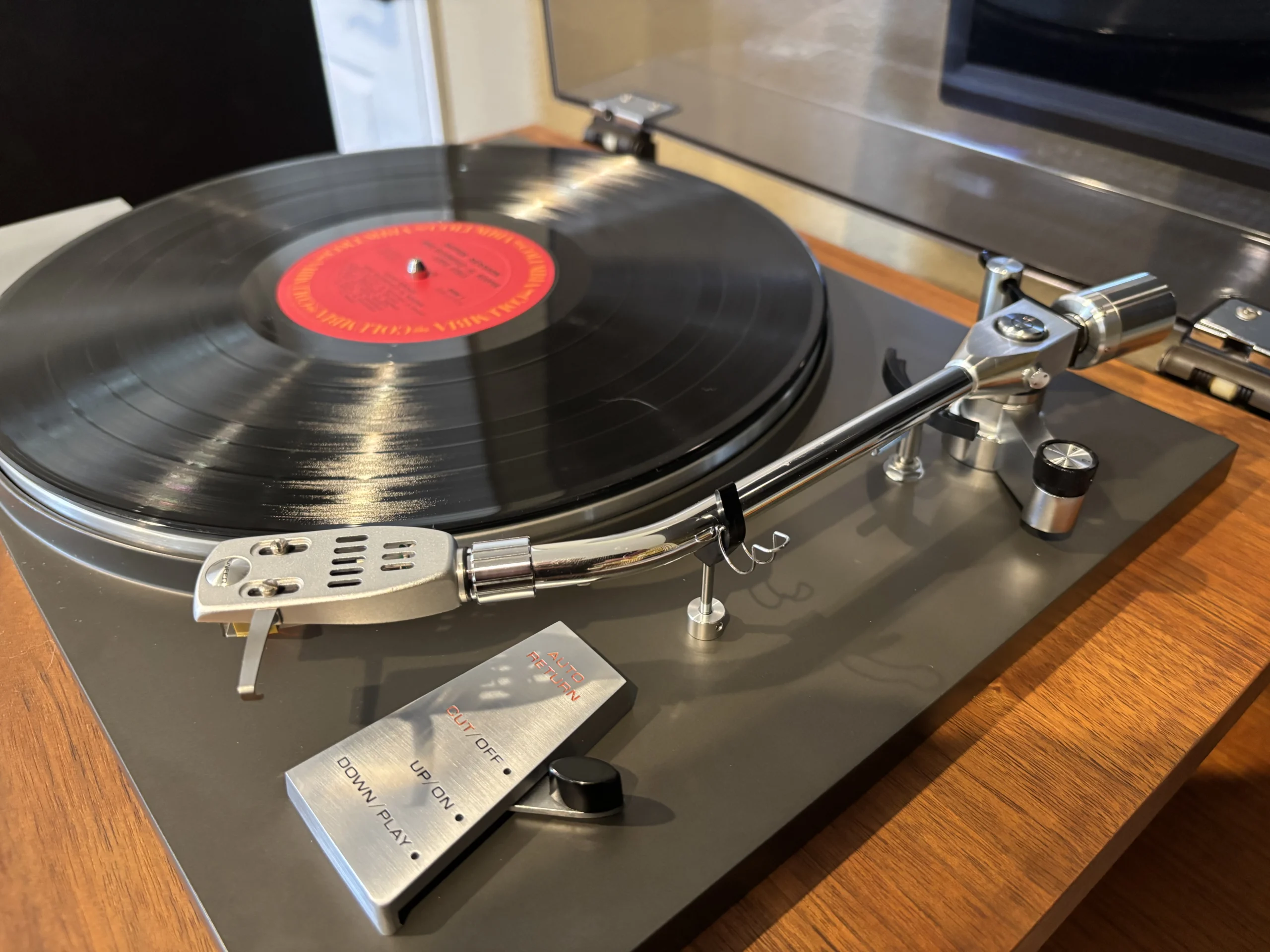
Setting Up the Pioneer PL-50:
Where Engineering Meets Precision
One of the most rewarding aspects of owning a vintage turntable like the Pioneer PL-50 isn’t simply listening to records, it’s taking the time to set the machine up exactly as its engineers intended. Unlike many of today’s plug-and-play record players, the PL-50 invites you to become part of the process. Every adjustment has a purpose, and every improvement can be heard once the stylus meets the groove. And, it give you the opportunity to buy some cool new tools.
The centerpiece of that experience is the beautifully engineered static-balanced S-shaped tonearm. With its polished aluminum finish, removable headshell, and silky-smooth bearings, it embodies the thoughtful design philosophy that defined Japanese hi-fi during the early 1970s. Even after five decades, the arm moves effortlessly across the record, allowing the cartridge to track with remarkable accuracy while minimizing unwanted friction and resonance.
The setup begins by balancing the tonearm so it floats perfectly level. Once balanced, the calibrated counterweight is rotated to apply the desired tracking force. Although the counterweight markings are surprisingly accurate, I verified the final setting with a digital stylus force gauge, ultimately settling on 1.5 grams. It’s a simple step, but one that pays enormous dividends in sound quality, tracking performance, and protecting both the stylus and your record collection.
Cartridge alignment is equally important. Rather than estimating the correct position, I ordered the proper Pioneer 49 mm overhang gauge, which positions the cartridge exactly as Pioneer specified. It’s a wonderfully simple tool that removes the guesswork from alignment and ensures the stylus traces the grooves with the lowest possible tracking error. For a turntable that has already celebrated its fiftieth birthday, taking the time to perform this adjustment felt like giving it the respect it deserves.
With the cartridge aligned and tracking force set, the final adjustment is Pioneer’s bias control, located at the base of the tonearm. Often referred to as anti-skate, this control compensates for the natural inward force generated as the stylus travels through the spinning record groove. Matching the bias setting to the tracking force- in my case, just under 1.5 – helps keep the stylus centered between both groove walls, improving channel balance, reducing distortion, and minimizing long-term wear on both records and stylus.
Why This Matters
The tonearm is the mechanical link between your cartridge and your records. Properly balancing the tonearm, setting the correct tracking force, and matching the bias control to that force allows the stylus to trace the groove as accurately as possible. These simple adjustments not only improve sound quality but also help preserve both your records and stylus for years to come.
Every control on the PL-50 operates with a reassuring mechanical precision that reminds you this machine was built when products were expected to last for decades. There are no flimsy plastic levers or vague adjustments here. Everything feels solid and build to last.
When the final adjustment was complete and I gently lowered the needle onto my first record, and it sounded incredible. Just how I remembered.
Pioneer PL-50 Specifications
Now What? What Happens if it Breaks?
One of the reasons I felt comfortable buying another PL-50 is knowing that this isn’t a turntable destined to become a shelf ornament if something eventually wears out. It’s meant to be used. And, thanks to a passionate community of vintage audio enthusiasts, replacement belts, cartridges, headshells, hinges, feet, and many other parts are still surprisingly easy to source. There’s something reassuring about owning a piece of equipment that’s still being cared for more than fifty years after it left the factory. With a little routine maintenance, there’s every reason to believe this Pioneer will still be spinning records for the next generation of vinyl lovers. When mine breaks, I’ll just fix it.
Will I continue to keep both the Fluance and the Pioneer – absolutely. Both are great decks that are real reprentations of their time.
I’m learning more about the care and maintenance of this turntable…what to use on the veneer, how to keep the slip mat in good shape, how to replace the belt, etc., and as I do, I’ll continue to update this post.

Email Newsletter Sign Up
Get vinyl tips, Denver record store updates, stereo gear guides, and music nostalgia delivered to your inbox.
weekly popular