Record Grading Explained
If you have been collecting vinyl long enough, you probably remember when record collecting was a different world.
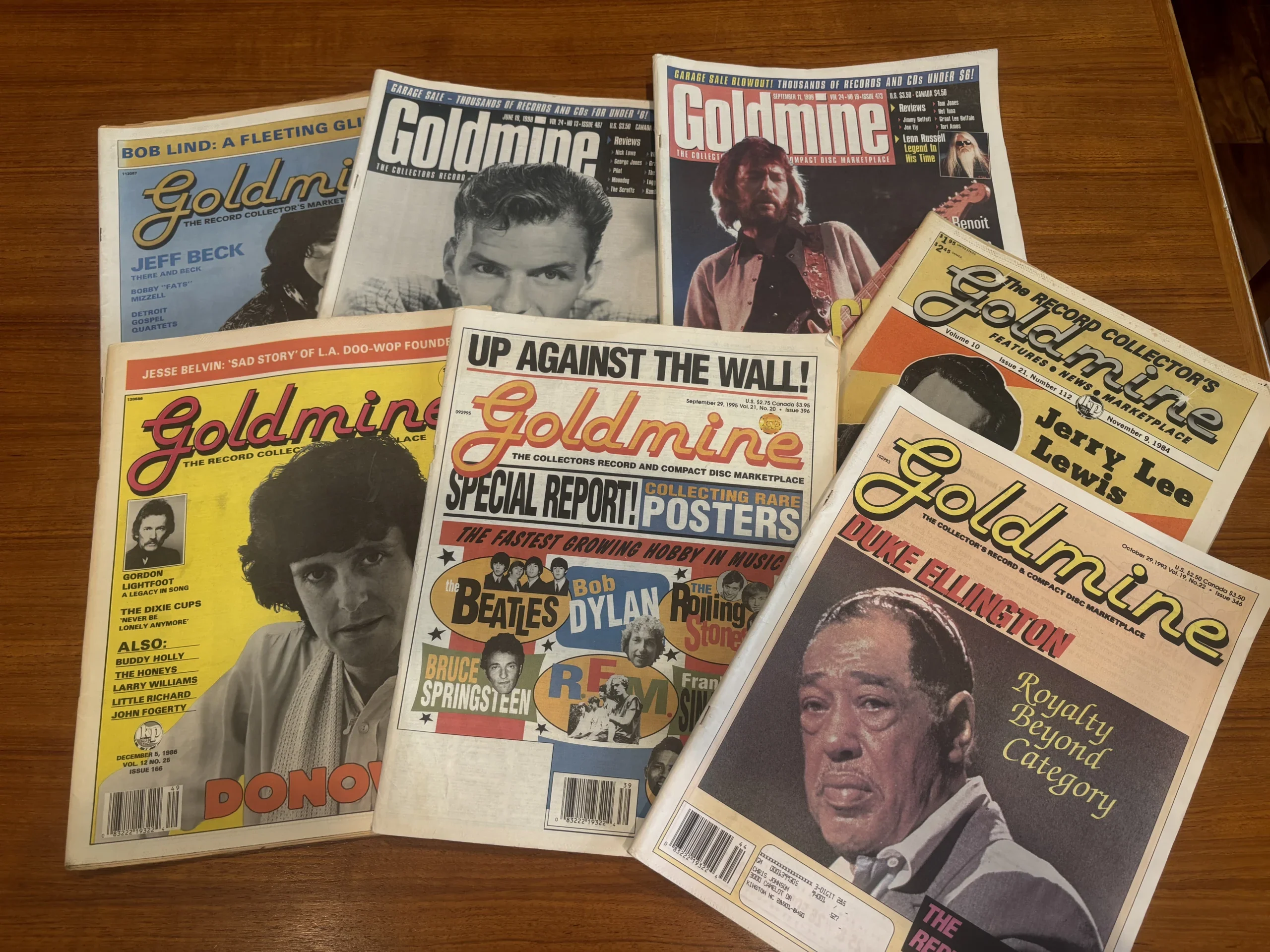
Before online marketplaces, before Discogs, before every record in the world could be searched, priced, and shipped across the country, collectors relied heavily on publications like Goldmine magazine. For many years, Goldmine was one of the central resources for serious record collectors — part price guide, part marketplace, and part community bulletin board.
One of the biggest challenges facing collectors was simple:
How do you describe the condition of a record accurately enough that someone else knows what they are buying?
A seller in California needed a common language to describe a record to a buyer in New York. “Looks pretty good” was not enough. “A little worn” meant different things to different people.
That is where standardized grading systems came into play.
The Goldmine Grading System
“Goldmine gave record collectors a common language. Before its grading standards became widely adopted, one seller’s ‘excellent’ could be another seller’s ‘good.’ Today, terms like Near Mint, VG+, and VG are recognized around the world thanks in large part to Goldmine’s influence.”
The grading system most collectors recognize today grew out of the standards popularized by Goldmine and later adopted widely throughout the collecting world.
The basic idea was simple: use a consistent scale to describe the condition of a record.
The grades generally run:
Mint (M)
A theoretically perfect record. Never played, flawless, and essentially impossible to improve upon.
In reality, true Mint records are extremely rare. Many sellers use this grade too casually.
Near Mint (NM or NM-)
A record that appears almost new. It may have been played, but it shows little or no evidence of use.
This is the grade many serious collectors actually want.
Very Good Plus (VG+)
The most common and most misunderstood grade.
A VG+ record should show some signs of handling or use, but nothing that seriously affects the listening experience. It may have light marks, minor sleeve wear, or a few cosmetic imperfections.
This is also where grading becomes subjective.
Very Good (VG)
A used record with noticeable wear. It may have surface noise, visible marks, or more obvious signs of handling, but it should still be enjoyable.
Good (G/G+)
A heavily played record. It may have scratches, noise, or other issues. Usually purchased because it is rare or inexpensive.
Poor/Fair
A damaged record. Warping, skips, severe scratches, or other problems are expected.
The Problem With VG+
Ask ten collectors what VG+ means, and you may get ten slightly different answers.
One seller’s VG+ might mean:
“A beautiful record with a few faint sleeve marks that plays quietly.”
Another seller’s VG+ might mean:
“A record with visible scratches that plays with some crackle.”
Both sellers may genuinely believe they are being accurate.
This is why buying used vinyl always involves some trust. A conservative grader with a good reputation is often more valuable than a seller who gives everything a generous grade.
A true VG+ from a careful collector is often a better purchase than an “NM” record from someone who grades everything optimistically.
Visual Grading vs Play Grading
This is where many new collectors get confused.
There are not two separate official grading systems called “visual grading” and “play grading.” Instead, these describe two different ways of evaluating a record.
Visual Grading
Visual grading is exactly what it sounds like: inspecting the record under good lighting.
Collectors look for:
- scratches
- scuffs
- groove wear
- spindle marks
- warps
- discoloration
- evidence of mishandling
For decades, this was the practical way most records were graded. Sellers could not realistically listen to every record in a collection of thousands.
The limitation is obvious:
A record can look great and sound bad.
A scratch may be shallow and harmless, or it may cause repeated noise. A record may look clean but have groove wear from being played with a poor-quality stylus.
Play Grading
Play grading means actually listening to the record.
The evaluator listens for:
- pops and clicks
- surface noise
- distortion
- mistracking
- groove damage
- noisy sections
Play grading provides valuable information because ultimately records are meant to be listened to.
But it has limitations too.
A seller may have different equipment than you do. A record may sound excellent on one turntable and reveal problems on another. Personal tolerance for surface noise also varies widely.
One collector may consider a few light pops completely acceptable. Another may consider the same record unacceptable.
Is Play Grading Always Better?
Not necessarily. A thorough play grade is wonderful, especially for expensive or rare records. But a careful visual grade from an experienced collector can also be very accurate. The best sellers often combine both:
- Inspect the record carefully.
- Know what visual signs usually mean.
- Listen when appropriate, especially for valuable records.
- Grade conservatively.
A record that looks VG+ and plays beautifully may be a better purchase than a record labeled NM that has never been properly inspected.
The Reality of Buying Used Vinyl
Record grading is not a perfect science. It is an agreed-upon language that helps collectors communicate. The grade matters, but so do:
- the seller’s reputation
- the rarity of the record
- the price
- your expectations
- whether you are collecting or simply listening
The best collectors eventually learn something important:
A record’s grade is a description, not a guarantee.
The joy of vinyl has always included a little discovery, finding a great copy, cleaning it properly, dropping the needle, and hearing music that has survived decades.
The grading system helps us get closer to that experience. It does not replace it.
How Discogs Changed Record Grading
For decades, record collecting was built around personal relationships, record shows, classified ads, and publications like Goldmine. A collector might find a record through a dealer, a local shop, or a fellow enthusiast who had a reputation to protect.
Then the internet changed everything. You can read more about about Discogs by checking out our Discogs 101 post here.
When Discogs launched, it transformed vinyl collecting by creating something that had never really existed before: a worldwide marketplace where millions of records could be bought and sold using a shared database. That was a massive improvement for collectors.
Suddenly, a record buyer could look up:
- the exact pressing
- catalog number
- country of manufacture
- label variation
- release history
- estimated value
- seller feedback
But Discogs also created a new challenge: Millions of people were now grading records. And not everyone interpreted the standards the same way.
A longtime record dealer who had been grading albums for 30 years might have a very different idea of VG+ than someone selling records online for the first time.
The grading system became more accessible, but the human judgment behind it remained.
The Rise of the “Online VG+”
The biggest grading debate in the modern era is probably the meaning of VG+.
Among experienced collectors, VG+ traditionally meant a record that was clearly used but still very enjoyable. It might have light marks or minor signs of handling, but it should not have significant problems during playback.
Online, however, VG+ became something of a gray area.
Some sellers use VG+ conservatively:
“A very clean record with minor cosmetic wear and excellent playback.”
Others use VG+ more generously:
“A used record with visible marks that plays without skipping.”
Both may technically believe they are being fair, but the difference can be enormous for the buyer.
This is why experienced collectors pay close attention to seller reputation, not just the grade itself. A conservative VG+ from a trusted seller can be a much safer purchase than an optimistic NM from someone who consistently grades higher than the record deserves.
Why Marketplace Feedback Matters
In the pre-internet era, reputation was local. A dealer at a record show who consistently overgraded records would quickly develop a bad name among collectors.
Online, feedback systems serve a similar purpose.
A seller with thousands of positive reviews and a history of accurate grading has something valuable: trust.
The best online sellers understand that grading is not about making a record sound better than it is. It is about setting the buyer’s expectations correctly.
A buyer who receives a record that is accurately described is far more likely to return, even if the record is not absolutely perfect.
The Collector’s Lesson
The internet made finding records easier than ever, but it did not eliminate the subjective nature of grading. A grading scale can tell you whether a record has wear.
It cannot tell you:
- how much surface noise you personally tolerate
- how a particular pressing sounds on your system
- whether a tiny scratch is audible
- whether a record was stored carefully for 40 years
That still requires experience. The best collectors eventually develop an eye – and an ear – for condition.The grading system is a useful language. It is not a guarantee.
And perhaps that is part of what makes collecting vinyl so interesting. Even in a world where nearly every record can be cataloged, priced, and shipped in seconds, there is still a human element involved in discovering the right copy.
Why Buying Records Locally Still Matters
OR, don’t worry about record grading at all – Just. Shop. Local.
In an age where almost any record can be found online within minutes, there is still something valuable about walking into a record store and holding an album in your hands. A photograph on a screen can show you a cover. A description can tell you a grade. A seller can tell you a record is VG+. But none of those things replace actually seeing the record yourself.
When you shop at a local record store, you can:
- inspect the vinyl under real light
- check for scratches and warps
- examine the jacket condition
- compare different copies of the same album
- talk with someone who knows the inventory
- listen to the record in person
You also get something that online buying cannot fully reproduce: context.
A good record store is not just selling used vinyl. It is helping connect people with music. The owner or staff may know that one pressing sounds better than another, that a certain artist’s catalog is worth exploring, or that the record sitting in the bin is something you would never have searched for online.
This is especially important for new collectors. A person starting a vinyl collection can spend hours reading grading guides, watching videos, and comparing online listings — but nothing replaces the experience of flipping through records and learning what condition really looks like.
A VG+ record in your hands tells you more than a VG+ label on a screen.
Online marketplaces have made collecting easier than ever, and they are an incredible resource for finding rare records. But local record stores remain one of the best places to develop your eye, your ear, and your taste as a collector.
Sometimes the best record purchase is the one you did not know you were looking for until you pulled it from the bin. Just ask Henry Rollins.
Email Newsletter Sign Up
Get vinyl tips, Denver record store updates, stereo gear guides, and music nostalgia delivered to your inbox.
weekly popular