Getting into Vinyl: What you Need to Know
How to Get Into Vinyl:
A Beginner’s Guide to Records, Turntables & Building a Collection
So you want to get into vinyl. Maybe you’ve inherited a box of records. Maybe you remember your parents’ turntable. Maybe you’ve been wandering through record stores and wondering what all the fuss is about. Or maybe you’re simply tired of listening to everything through a streaming app and want to experience music in a more tangible way. Whatever brought you here, you don’t need to know much about vinyl to get started.
You don’t need a $2,000 turntable. You don’t need a massive collection. You don’t need an audiophile listening room. And you definitely don’t need to understand every piece of terminology before you buy your first record. And just a heads up…there are affiliate links on this page, and if you click on one and make a purchase, RMR may earn a small commission at no cost to you. There are also a ton of links that take you to other pages on this site for more info, so click on those at least!
You just need a way to play records, a few records you actually want to hear, and a little patience.
This guide will walk you through the basics of getting into vinyl…from choosing your first turntable and speakers to buying records, taking care of them, and building a collection you’ll actually enjoy.
The Short Version: How to Get Into Vinyl?
If you want the simplest possible answer, here it is:
1. Buy a decent turntable.
2. Make sure you have the right equipment to hear it.
3. Buy a few records you genuinely love.
4. Learn how to handle and clean your records.
5. Start exploring record stores.
6. Build your collection slowly.
That’s really it. The biggest mistake beginners make is thinking they need to know everything before they begin. And you definitely don’t — vinyl is a hobby you learn by doing.
What Do You Need to Play LPs?
Before you buy anything, it’s important to understand what a basic vinyl system consists of.
At its simplest, you need:
- A turntable
- A phono preamp, if your system doesn’t already have one, or a Bluetooth turntable and Bluetooth speakers.
- An amplifier or receiver
- Speakers
- Records
There are several ways to put those pieces together, and some modern turntables simplify the process considerably. You can even buy a bundle that contains a nice, Fluance turntable and Bluetooth speakers, and you’ll be all set.
The Easiest Beginner Setup
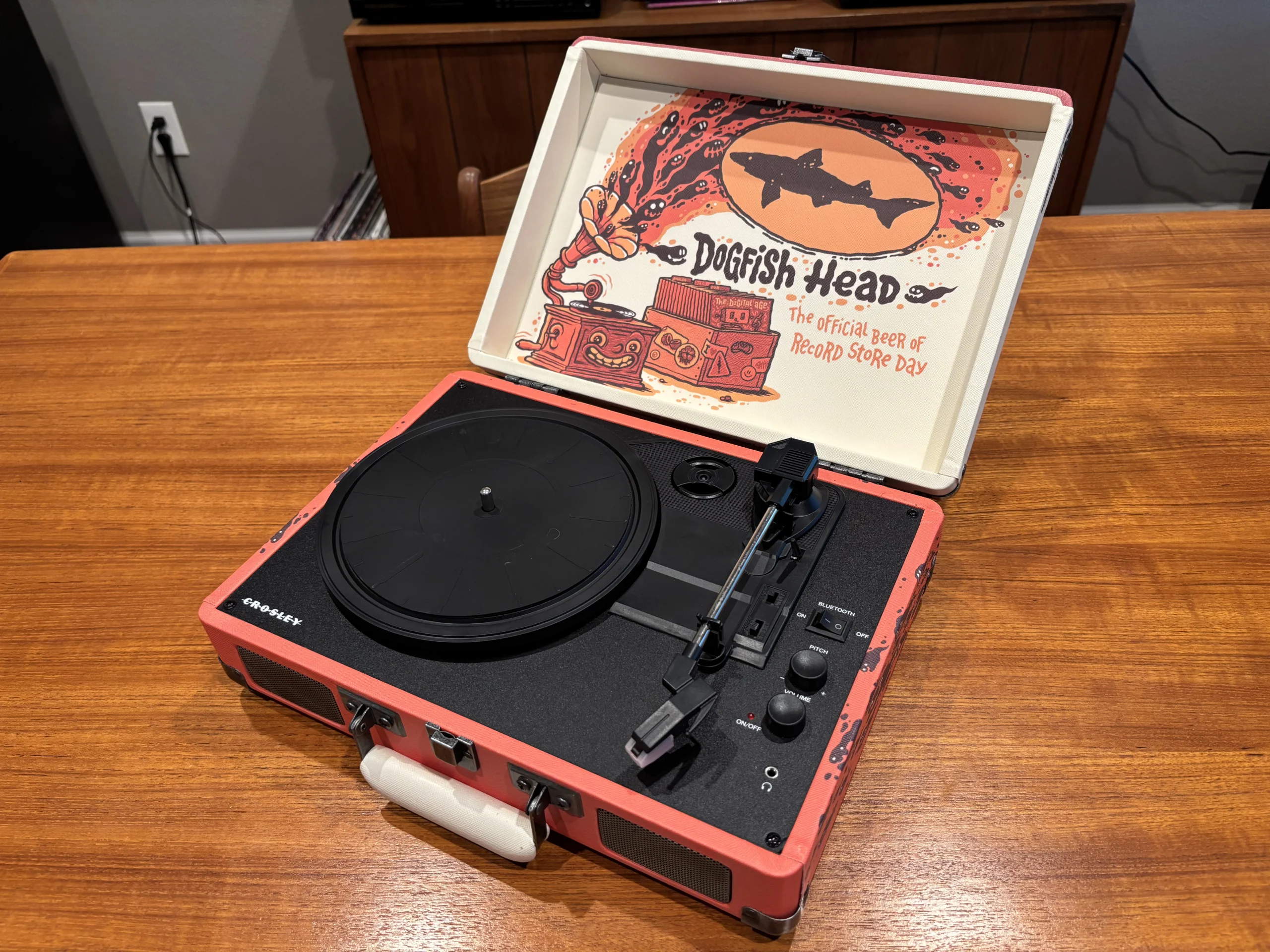
The absolute easiest and cheapest way is a suitcase turntable from a company like Crosley. I have talked about these elsewhere on this site, and they are a way to get your foot in the door, but please don’t think that the audio quality on a suitcase turntable is going to be anywhere near as good as an offering from Fluance, Audio-technia or U-Turn. And they’re not supposed to. They are just an inexpensive way to hear records. So, if that’s what it takes, grab one and get listening. You’ll likely want to upgrade sooner than later. But, you can grab one of these off of Amazon, and you’re off to the races. Spend $80 on a suitcase record player and another $100 on records, and you’ve got yourself a pretty nice little weekend.
Moving on: The Next Step Up in Turntables.
For many first-time listeners, a turntable with a built-in phono preamp connected to powered speakers is one of the simplest ways to get started.
The signal goes roughly like this:
Record → Bluetooth Turntable → Bluetooth Powered Speakers
Record → Turntable → Phono preamp → Speakers
If you’re using a traditional stereo receiver or amplifier, the setup may instead look like:
Record → Turntable → Phono input → Receiver → Speakers
Understanding this basic signal path will save you a lot of confusion later.
What will it Cost?
This is where you’ll hear wildly different answers. You can spend hundreds or thousands of dollars on a turntable, but you don’t have to. A sensible beginner system can be built without spending a fortune. The important thing is not to buy the absolute cheapest equipment you can find simply because you’re new. A poorly made turntable can make vinyl frustrating rather than enjoyable. Instead, think about your first setup as an entry point and you can always upgrade later – please read more here on our Beginner Turntable Guide.
A Reasonable Beginner Vinyl LP Starter Budget
You might divide your initial budget roughly like this:
Turntable: $150–$400
Speakers: $100–$400
Records: $50–$150
Cleaning/storage supplies: $25–$75
You don’t have to buy everything at once. In fact, I’d rather see someone buy a good $250 turntable and three records they love than spend $1,000 on equipment and have nothing interesting to play. And, I’m a huge fan of Facebook Marketplace and Craigslist for searching for used gear. Just make sure you can test it out and listen to it first. Right now, on Facebook Marketplace, I’m seeing a very nice Music Hall MMF-5.1 turntable for $349, a couple of Crosleys for $20 and a Sony for around $200. So, they are out there used, if you’re OK with meeting up with Facebook Marketplace people. Just check their ratings and take someone with you.
Choosing Your First Turntable
This is probably the biggest decision you’ll make when getting into record. And here’s the first piece of advice:
Don’t buy a turntable simply because it looks cool.
Looks matter. Vintage equipment can be beautiful. But the turntable’s job is to track the record accurately and reliably.
For a beginner, look for:
- Adjustable tracking force
- Adjustable anti-skate
- A replaceable stylus
- A reasonably good cartridge
- A stable platter
- Proper speed control
- A tonearm that can be balanced correctly
- A reputable manufacturer
You can click here for our Guide to Turntable Parts which will define all of the items above. You don’t necessarily need all the features found on expensive audiophile turntables. You need a turntable that does the basics correctly.
New vs. vintage turntables
This is one of the great debates in vinyl. A vintage turntable can be fantastic, I have a beautiful Pioneer PL-50 from the early 70s and I love it. But I also know that I’ll be spending money on upkeep and repair. I also have a Fluance RT87 that I did a review on here. They are both great turntables, but you can be just as happy with a U-Turn Audio Gen 2 Turntable.
A vintage turntable will inevitably need a new belt, cartridge, stylus, cables, lubrication, electrical work or other repairs. If you enjoy tinkering, vintage can be incredibly rewarding. But if you simply want to play records tonight, a good modern turntable may make more sense.
Neither approach is inherently better, it all depends on what you want from the hobby.
What About Bluetooth Turntables?
Yes, Bluetooth turntables are a real thing — and they can make sense for certain beginners. A Bluetooth-equipped turntable can transmit the audio wirelessly to compatible speakers or headphones. That can be convenient if you don’t want to build a traditional stereo system.
The record is still being played mechanically, but the audio is converted and transmitted digitally over Bluetooth before reaching the wireless speaker or headphones. If your goal is simply convenience, Bluetooth can be a perfectly reasonable option. If your goal is building a traditional hi-fi system, I’d lean toward a conventional wired connection. That said, you do you. If Bluetooth is your jam, enjoy it.
Do I Need a Phono Preamp?
Maybe. This is one of the most confusing parts of getting started. A turntable produces a very low-level signal that normally needs to be amplified by a phono preamp before it can be sent to a standard amplifier or receiver. Some turntables have a phono preamp built in and some receivers have a dedicated PHONO input.
Some systems need an external phono preamp. That’s why you should always check what equipment you already have before buying anything.
A basic setup might look like:
Turntable with built-in phono preamp → AUX input
Or:
Turntable → PHONO input on receiver
Or:
Turntable → external phono preamp → AUX input
If you’re unsure which one you need, don’t guess. [Read our guide to Phono vs. AUX]
What Speakers Do I Need?
You have two basic choices.
Powered speakers
Powered speakers contain their own amplification. And they’re an excellent option for beginners because they eliminate the need for a separate receiver or amplifier.
Turntable → powered speakers
Simple.
Passive speakers
Passive speakers require an amplifier or receiver. The setup becomes:
Turntable → receiver/amplifier → speakers
This takes up more space but gives you more flexibility as your system grows.
If you already own a stereo receiver, passive speakers may be the obvious choice.
Your First Records: What to Buy?
Here’s my favorite advice for new vinyl collectors: Buy music you actually love.
Don’t start buying records because somebody on the internet tells you that they’re “essential.”
Your first records should make you want to sit down and listen. Start with albums you already know – Taylor Swift fan? Go grab her latest album. Dig trance or electronic? Grab a Boards of Canada release, or Nightmares on Wax.
Then branch out. Maybe you discover an artist through a record-store recommendation. Maybe you find something in the dollar bin that you’ve never heard before.
That’s where vinyl gets fun.
Don’t worry about building a huge collection
You don’t need 500 records. You don’t even need 50…ten records you absolutely love are worth more than a shelf full of albums you bought because they looked collectible.
New Vinyl vs. Used Vinyl
Both have their place.
New vinyl
Advantages include:
- Generally easier to find
- No previous owner
- Usually easier to return if there’s a manufacturing problem
- Often available in current editions and reissues
The downside is that new records can be expensive.
Used Vinyl
This is where the adventure begins. Used records can be inexpensive, rare, beautifully preserved, or completely trashed. Sometimes all four possibilities are sitting in the same record-store bin. Learning how to evaluate condition is one of the most useful skills you can develop.
Read more about Grading Records here.
Your First Trip to a Record Store
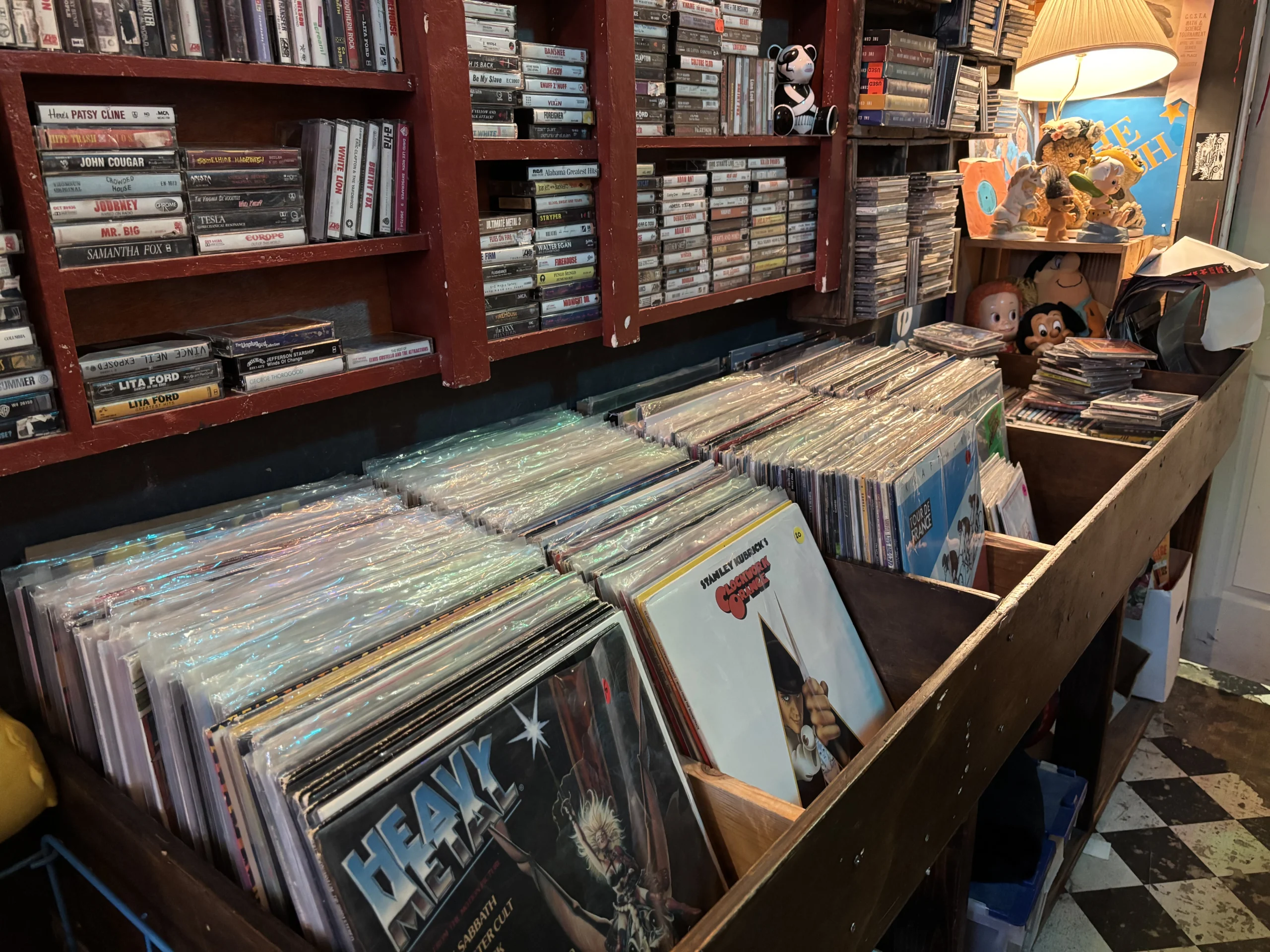
This is where I think vinyl really separates itself from streaming. Go into a record store without a plan. Just dig through the bins. Look at the covers and artwork. Ask the person behind the counter what they’re listening to. Tell them what you like and ask for suggestions.
Don’t be embarrassed if you don’t know something.
Record stores are full of people who have spent decades learning this stuff, and most are happy to talk about records. And if you find something interesting that you’ve never heard before, buy it.
That’s part of the fun.
If you’re in Colorado, we’ve also put together guides to help you find record stores around Denver and beyond.
[Explore Denver Record Stores]
How to Take Care of Your Records
Once you start buying records, you’ll quickly discover that vinyl isn’t maintenance-free, but fortunately, taking care of records isn’t difficult.
Handle records by the edges
Try not to touch the playing surface, as the oils from your fingers can attract dust and contaminants.
Keep records in sleeves
A good inner sleeve can help protect the record from scratches, dust and other damage.
Store records vertically
Don’t stack your records in a giant horizontal pile. Store them upright (like books) with enough support that they aren’t leaning severely.
Keep records away from heat
Vinyl can warp, so avoid storing records in places exposed to excessive heat or direct sunlight.
Clean records when necessary
A dirty record can produce noise and pops and can also carry contaminants toward the stylus.
[Read our guide to How to Clean Vinyl Records]
[Read our guide to Reducing Vinyl Record Static]
What Should You Buy First?
If you’re starting from absolutely nothing, here’s a sensible order:
1. Start with the turntable
Choose a reputable beginner model that fits your budget.
2. Figure out your amplification
Determine whether you need a receiver, amplifier, phono preamp or powered speakers.
3. Buy a few records
Start with music you love.
4. Get basic cleaning supplies
A simple record brush and proper storage will go a long way.
5. Learn the basics
Understanding your turntable will make the hobby much more enjoyable.
6. Visit record stores
This is where you’ll discover things you didn’t know you were looking for.
7. Build your collection slowly
Don’t rush.
Vinyl Basics: Where to Go Next
Once you’ve got the basics down, Rocky Mountain Records has a growing collection of beginner-friendly guides to help you go further.
Turntable Basics
- Beginner Turntable Guide
- The Complete Guide to Turntable Parts
- How to Connect a Turntable
- Anti-Skate Explained
- Turntable Tracking Force
- Phono vs. AUX: How to Connect a Turntable
- Bluetooth Turntables
Vinyl Basics
- How to Clean Vinyl Records Properly
- Vinyl Record Static: Why It Happens and How to Remove It
- Vinyl Record Grading Explained
- Vinyl Record Sleeves Guide
- How to Use Discogs
- Vinyl Collector Terms
Going Deeper
- 45 RPM Records Explained
- Audiophile Vinyl Pressings: MoFi, UHQR & Analogue Productions
- Why Japanese Vinyl Pressings Are So Highly Sought After
- Original Pressings vs. 180g Vinyl
- White Label Promo Records
- What Is a Cutout Album?
You don’t have to read all of them. Just pick the subject you’re curious about and start there. That’s how most of us got into vinyl in the first place.
Email Newsletter Sign Up
Get vinyl tips, Denver record store updates, stereo gear guides, and music nostalgia delivered to your inbox.
weekly popular